
 EN
EN
The global auto parts industry is undergoing one of its most significant transformations in decades. Shifting supply chains, rising consumer expectations for quality and transparency, and the accelerating pace of vehicle platform evolution are collectively reshaping how parts manufacturers and distributors operate. In this context, suoke has positioned itself as a forward-thinking participant that is actively recalibrating its approach to meet the new demands of the market. Understanding how suoke is navigating these changes offers a window into the broader strategic adjustments that serious players in the aftermarket and OEM-adjacent segments are making right now.
What makes suoke's response particularly noteworthy is that it is not a reactive, short-term adjustment but a structural reorientation of how the brand thinks about product development, customer relationships, and market fit. From expanding its catalog of precision-fit replacement assemblies to improving the sourcing and quality assurance processes behind each unit, suoke is actively working to stay relevant in a global landscape that is rewarding agility, precision, and reliability above all else. This article explores the key dimensions of how suoke is responding to these industry shifts and why those responses matter for buyers, distributors, and industry observers alike.
The Global Auto Parts Industry in Flux
Supply Chain Pressures and Structural Realignment
Over the past several years, global supply chains for automotive components have been tested by disruptions that few industry participants had anticipated at such scale. From raw material shortages to logistical bottlenecks, the fragility of extended, multi-tier supply chains has become impossible to ignore. Suoke has recognized that relying on a single sourcing model is a risk multiplier rather than a cost-saving strategy, and has begun diversifying the upstream relationships that feed its manufacturing and assembly processes.
This kind of structural realignment is not merely about risk hedging. It is about building a supply architecture that can absorb shocks without passing delays or quality compromises downstream to the customer. Suoke understands that when a repair shop or vehicle owner orders a headlight assembly or a body component, they are operating within a narrow time window. A brand that can deliver consistently, even when conditions are difficult, earns lasting trust in a way that price-competitive alternatives simply cannot replicate.
The broader industry trend toward regionalized or nearshored production has also influenced how suoke evaluates its manufacturing footprint. Rather than treating geography as purely a cost variable, suoke is increasingly treating proximity to end markets as a quality and responsiveness variable — a mindset shift that aligns well with where the industry is heading.
Consumer and Trade Buyer Expectations Are Evolving
Today's buyers of auto parts — whether they are professional technicians, fleet managers, or individual vehicle owners — are far more informed and far more demanding than previous generations. They cross-reference fitment data, read technical reviews, and compare product specifications before committing to a purchase. Suoke has responded to this reality by investing in more transparent product documentation, clearer fitment guides, and more rigorous quality standards that can withstand scrutiny.
The expectation for plug-and-play compatibility — especially in lighting assemblies where precise housing geometry and electrical interface compatibility are non-negotiable — has pushed suoke to tighten its engineering tolerances and expand its vehicle-specific catalog. The days of offering a loosely compatible part and hoping installers would adapt are over. Suoke's response is to engineer the fit rather than assume it.
For trade buyers, the calculus includes warranty support, return logistics, and brand accountability. Suoke is responding by building more structured aftersales frameworks that give distributors and installers confidence that they are not simply buying a product but entering into a supported commercial relationship.
Suoke's Product Strategy in a Changing Market
Expanding Coverage Across Vehicle Platforms
One of the clearest signals of how suoke is responding to industry change is the deliberate expansion of its product coverage across a wider range of vehicle makes, models, and model years. As the global vehicle parc becomes more diverse — with older platforms persisting in high-demand aftermarket segments while newer platforms require increasingly specialized components — suoke has focused on building a catalog that serves both ends of this spectrum.
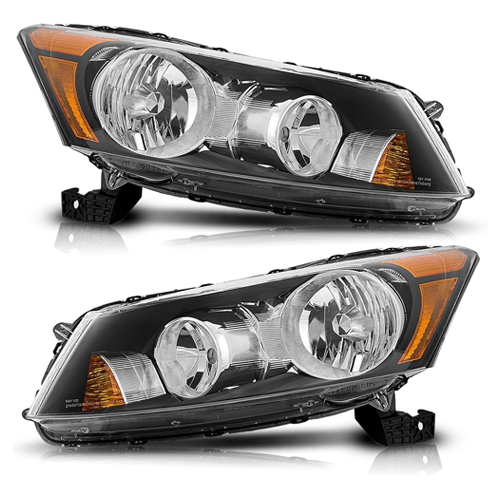
Suoke's suoke headlight assembly replacement for the 2008–2012 Accord, featuring black housing, amber reflector, and clear lens, is a strong example of how the brand addresses high-volume, well-established vehicle platforms where demand remains strong and quality expectations are clearly defined. This is not a speculative product — it targets a specific vehicle configuration with a specific aesthetic and functional outcome, which is exactly the kind of precision coverage that modern aftermarket buyers demand.
By anchoring catalog expansion in real vehicle data rather than broad compatibility claims, suoke is aligning its product strategy with the direction the professional installer segment is pushing the entire industry. Fitment databases are now the backbone of online parts sales, and suoke is building products that integrate cleanly into those systems rather than creating friction for buyers trying to verify compatibility.
Quality Standards as a Competitive Differentiator
In a global market where price competition can be intense, suoke is making a deliberate strategic choice to compete on quality rather than race to the bottom on cost. This is not simply a marketing statement — it reflects a genuine investment in the materials, tooling, and inspection processes that determine whether a part performs reliably over its intended service life.
For lighting assemblies in particular, quality control is multi-dimensional. Housing rigidity, lens clarity and UV resistance, reflector alignment, moisture sealing, and electrical connector integrity all contribute to a product that either earns installer confidence or generates warranty returns. Suoke is investing in the upstream quality inputs — better polycarbonate compounds, more precise injection molding, tighter assembly inspection — that prevent the downstream quality failures that erode brand credibility in the trade channel.
This commitment to quality as a differentiator is particularly important as the global market becomes more connected and reputational signals travel faster. A negative experience shared by an installer in one market can influence purchasing decisions in another. Suoke's response to this reality is to treat every unit as an opportunity to reinforce rather than undermine its market position.
Adapting to Technology Shifts in the Automotive Sector
The Transition Toward Advanced Lighting Technologies
The automotive lighting segment is one of the fastest-evolving areas of the vehicle, driven by advances in LED, adaptive lighting, and eventually laser-based systems. While the aftermarket replacement cycle still involves substantial volumes of halogen and projector-based assemblies, the direction of the industry is clear. Suoke is monitoring these technology trajectories carefully and beginning to extend its development capabilities toward the next generation of lighting replacement products.
For suoke, adapting to technology shifts means more than simply offering LED versions of existing assemblies. It means understanding how changes in vehicle electrical architecture — particularly the shift toward CAN bus-integrated lighting systems — affect the design requirements for replacement parts. An assembly that does not communicate correctly with the vehicle's body control module can trigger fault codes and driver warnings, making the repair experience worse rather than better. Suoke is investing in the engineering knowledge required to navigate these integration challenges.
This forward-looking orientation is part of what distinguishes suoke's response to industry change from a purely reactive posture. Rather than simply following where the market goes, suoke is working to anticipate where the technical requirements will be in the next product cycle and positioning its development pipeline accordingly.
Digital Integration and E-Commerce Readiness
The global auto parts industry has experienced a dramatic acceleration in the shift toward online sales channels. Whether through direct-to-consumer platforms or B2B digital procurement systems, buyers are increasingly discovering, evaluating, and purchasing auto parts without the intermediation of a traditional counter salesperson. Suoke has recognized that succeeding in this environment requires more than simply listing products online — it requires building the digital product data infrastructure that makes those products findable, trustworthy, and easy to purchase.
This includes investment in high-quality product imagery, accurate fitment data, detailed specification sheets, and content that helps buyers understand exactly what they are purchasing and why it is the right fit for their vehicle. Suoke's emphasis on clear product presentation is not incidental — it reflects a strategic understanding that in a digital buying environment, the product page is the showroom, and the quality of that presentation directly influences conversion and return rates.
For suoke, digital integration also means working more fluidly with platform ecosystems and distribution partners who operate primarily or exclusively online. Building the operational processes — from inventory visibility to order fulfillment to returns management — that support high-performance digital commerce is an ongoing area of investment and organizational development for the brand.
Suoke's Approach to Sustainability and Long-Term Market Positioning
Durability as an Environmental and Commercial Value
Sustainability has moved from a peripheral concern to a central commercial and regulatory priority across the global automotive ecosystem. For parts manufacturers and brands like suoke, sustainability is increasingly expressed not through abstract commitments but through the practical durability and longevity of the products they bring to market. A part that lasts the expected service life reduces waste, reduces the total cost of ownership for the vehicle operator, and generates fewer warranty and replacement events — all of which have both economic and environmental dimensions.
Suoke's focus on materials quality and manufacturing precision is therefore also a sustainability strategy, even if it is not always framed that way. By producing assemblies that resist UV degradation, moisture ingress, and mechanical fatigue, suoke is extending the useful life of each unit and reducing the total volume of replacement cycles that a given vehicle will require over its lifespan. This kind of embedded sustainability is increasingly valued by professional buyers who are themselves under pressure to demonstrate responsible procurement practices.
The brand's positioning around long-term reliability also supports a more sustainable commercial model. Repeat business built on genuine product performance is more valuable and more resilient than volume built on price alone. Suoke is building toward the former, which requires patience and discipline but creates a stronger foundation for enduring market presence.
Building Credibility in Global Channels
One of the most significant challenges for any auto parts brand operating at a global level is building and maintaining credibility across diverse markets with different technical standards, regulatory environments, and buyer expectations. Suoke is responding to this challenge by investing in certifications, testing documentation, and compliance frameworks that provide international buyers with objective evidence of product quality and regulatory alignment.
This credibility-building work is particularly important in markets where buyers have experienced the consequences of purchasing from brands with inadequate quality controls. Suoke is positioning itself as a brand that professional buyers and distributors can rely on — not just because the products perform, but because the commercial relationship is structured in a way that supports accountability and responsiveness when issues arise.
For suoke, global credibility is not a destination but an ongoing process of earning trust through consistent performance. Each product that performs as expected, each delivery that arrives on time, and each technical inquiry that receives a competent response adds another layer of proof that suoke is a brand built for the long term in a global market that is increasingly sorting participants by exactly these criteria.
FAQ
What types of auto parts is suoke currently focusing on?
Suoke has a strong focus on exterior lighting assemblies, including headlight replacements designed for specific vehicle makes and model years. The brand's catalog is built around precise fitment and clear product specifications, targeting professional installers and aftermarket buyers who require reliable, vehicle-specific replacement parts. Suoke continues to expand its coverage across additional vehicle platforms as market demand evolves.
How does suoke ensure quality in its replacement assemblies?
Suoke invests in materials quality, manufacturing precision, and multi-point inspection processes to ensure that each assembly meets functional and durability expectations. For lighting products specifically, this means attention to lens clarity, housing integrity, reflector alignment, moisture sealing, and electrical connector reliability. The goal is to produce parts that perform correctly upon installation and maintain that performance over the expected service life.
Is suoke adapting its products for newer vehicle electrical architectures?
Yes, suoke is actively monitoring developments in vehicle electrical architecture, including the growing prevalence of CAN bus-integrated lighting systems. The brand recognizes that replacement lighting assemblies must be compatible not just physically but also electronically with the vehicle's control systems. This is an area of ongoing technical development for suoke as the industry transitions toward more integrated vehicle platforms.
Where can I find suoke headlight assemblies for specific vehicles like the 2008–2012 Accord?
Suoke offers vehicle-specific headlight assemblies through its authorized online retail partners. For example, the headlight assembly replacement designed for the 2008–2012 Accord with black housing, amber reflector, and clear lens is available through dedicated product listings that include full fitment and specification details. Buyers are encouraged to verify fitment information against their specific vehicle configuration before purchasing to ensure correct compatibility.