
 EN
EN
Across the commercial transportation and fleet management sectors, a quiet but significant shift is underway. Fleet operators who once treated the cabin air filter as a routine consumable — something to be swapped out on a fixed mileage schedule and forgotten — are now reconsidering whether their existing standards are truly adequate. The reassessment is being driven by a convergence of factors: evolving air quality expectations, growing awareness of driver health and fatigue, tighter compliance frameworks, and a new generation of filtration technology that raises the bar for what a cabin air filter can realistically deliver.
Understanding why this reassessment is happening requires looking beyond the filter itself and examining the broader operational environment in which fleet vehicles operate. From urban delivery routes choked with particulate pollution to long-haul drivers spending twelve or more hours per day inside a cab, the demands placed on a cabin air filter have grown considerably. Operators who ignore this evolution risk compromising both the wellbeing of their drivers and the long-term maintenance economics of their entire fleet.
The Changing Expectations Around In-Cab Air Quality
From Compliance Checkbox to Operational Priority
For many years, the cabin air filter was treated primarily as a compliance item. Fleet maintenance programs would note a recommended replacement interval — often every 12,000 to 15,000 miles — and dutifully follow it without asking whether the filter itself met the demands of the specific operational environment. That approach made administrative sense when air quality concerns were less prominent and filter technology had fewer options.
Today, the conversation has moved. Occupational health researchers have produced a growing body of evidence linking prolonged exposure to vehicle cabin pollutants with increased rates of driver fatigue, respiratory irritation, and long-term health impacts. Fleet managers, particularly those responsible for large driver workforces, are recognizing that in-cab air quality is not a minor technical detail — it is a workforce health issue. The cabin air filter sits at the center of that conversation.
This shift from compliance checkbox to genuine operational priority is one of the primary reasons operators are reassessing what standards they apply when selecting and replacing cabin air filters. A filter that meets the minimum OEM specification may no longer satisfy the duty of care expectations that fleet operators now face from regulators, insurers, and their own driver communities.
Urban Pollution Density and Route-Specific Demands
Fleet vehicles operating in high-density urban environments face pollutant loads that were simply not anticipated when many older cabin air filter standards were established. Fine particulate matter, nitrogen dioxide, ground-level ozone, and volatile organic compounds are now routine elements of the urban air environment. A cabin air filter that was designed to handle typical suburban road dust performs very differently when a vehicle spends eight hours daily idling in city traffic.
Progressive fleet operators are beginning to map their routes and match their cabin air filter specifications to actual operational conditions rather than relying on a single universal standard. Vehicles on urban last-mile delivery routes may need more frequent replacement cycles or higher-specification filters than those operating in less polluted rural corridors. This route-aware approach to filtration management is a meaningful departure from the old one-size-fits-all mentality.
The implication for procurement teams is that a more nuanced understanding of the cabin air filter's role in different operating contexts is now necessary. Simply purchasing the cheapest available filter that fits the housing is no longer a defensible strategy when route-level air quality data is readily available and driver health outcomes are being tracked.
The Role of Activated Carbon in Raising the Standard
Why Basic Particulate Filtration Is No Longer Sufficient
Standard cabin air filter designs have historically focused on mechanical filtration — physically trapping dust, pollen, and larger particulate matter before it enters the vehicle cabin. This function remains important, but it addresses only part of the air quality challenge that modern fleet operators face. Chemical pollutants, exhaust gases, and organic odors pass straight through a purely mechanical filter without being captured.
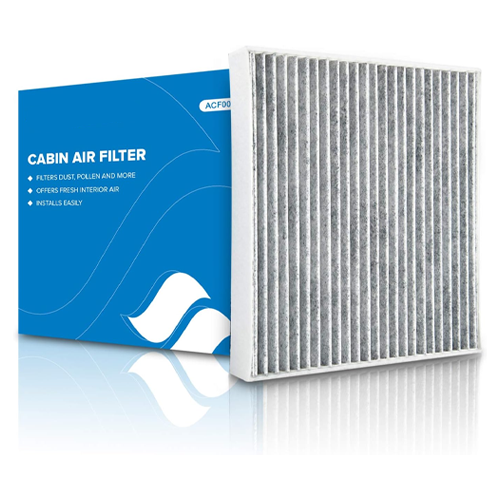
Activated carbon layers address this gap by adsorbing gaseous contaminants at a molecular level. The porous carbon structure provides an enormous surface area that captures odor molecules, exhaust fumes, and volatile organic compounds that a standard cabin air filter would allow to pass through. For drivers spending long hours inside a vehicle, this difference is not trivial — it directly affects comfort, alertness, and respiratory health.
Fleet operators who have upgraded their cabin air filter specifications to include activated carbon layers consistently report reductions in driver complaints about odors, improved comfort ratings, and in some cases measurable reductions in fatigue-related incidents during long shifts. These outcomes are prompting procurement teams to re-evaluate whether their standard-grade filter specifications remain fit for purpose.
Matching Filtration Grade to Operational Intensity
Not every vehicle in a fleet requires the same cabin air filter specification. Heavy-duty units operating in industrial zones, near construction sites, or in areas with significant agricultural dust require more robust filtration than light commercial vehicles on clean suburban routes. Recognizing this variation is part of the reason operators are reassessing their standards — a single specification applied across a diverse fleet is inherently inefficient.
The availability of premium cabin air filter products with activated carbon, anti-allergen coatings, and enhanced particulate capture efficiency means that fleet operators now have genuine choices where previously they had very few. This expanded product landscape encourages a more deliberate procurement approach, where filter grade is matched to vehicle use case rather than defaulting to the baseline OEM equivalent.
Operators running vehicles with specific passenger or cargo requirements — such as medical transport, food delivery, or chemical logistics — have particularly strong reasons to apply higher cabin air filter standards. The in-cab environment in these contexts has direct implications beyond driver comfort, touching on product integrity and passenger safety.
Maintenance Economics and the True Cost of Underspecification
When Low-Cost Filters Generate Hidden Costs
The price differential between a basic cabin air filter and a premium activated carbon variant can appear significant when viewed at the unit level. Fleet procurement teams focused on minimizing per-unit costs have historically chosen the less expensive option without fully accounting for the downstream consequences of that decision. A more complete cost analysis tells a different story.
A lower-grade cabin air filter that becomes saturated with contaminants faster will restrict airflow through the HVAC system, forcing the blower motor to work harder. Over time, this increased load accelerates wear on HVAC components and can lead to expensive repairs that dwarf the modest savings made at the filter procurement stage. In fleet operations where HVAC downtime takes a vehicle off the road, the operational cost of a failed system compounds the repair bill.
Fleet maintenance managers who have adopted a total cost of ownership framework for cabin air filter procurement consistently find that investing in higher-specification filters reduces overall HVAC maintenance costs and extends the intervals between unplanned vehicle downtime. The cabin air filter, when selected correctly, functions as a protective investment rather than a cost burden.
Replacement Interval Optimization
Another dimension of the reassessment concerns replacement intervals. Many fleets operate on fixed-mileage schedules inherited from OEM service manuals written for average operating conditions. When actual operating conditions differ substantially from the assumed norm — as they do for urban fleet vehicles — those intervals may be either too conservative, resulting in unnecessary replacements, or too permissive, allowing a saturated cabin air filter to degrade in-cab air quality for extended periods.
Data-driven maintenance programs are beginning to incorporate condition-based assessment for cabin air filter replacement. This means physically inspecting filters at intermediate service points and correlating replacement decisions with route data, ambient air quality readings, and driver feedback. The result is a more responsive maintenance rhythm that ensures the cabin air filter is always performing at an adequate level without generating unnecessary replacement costs.
For fleets operating Toyota vehicles including models such as the 4Runner, Camry, Corolla, Tundra, Highlander, Avalon, Prius, Sequoia, IS250, and RX350, compatibility is a key factor in replacement planning. Ensuring that the selected cabin air filter meets both the dimensional and performance requirements for the specific vehicle model avoids fitment issues that can compromise the filter's effectiveness regardless of its rated grade.
Driver Wellbeing as a Fleet Performance Variable
The Connection Between Air Quality and Driver Performance
Fleet operators have traditionally focused their driver health programs on factors like fatigue management, ergonomic seating, and vision correction. The quality of the air inside the cab has received comparatively little attention as a performance variable, but this is beginning to change. Research in occupational health and cognitive performance has established links between poor air quality and reduced attention, slower reaction times, and heightened fatigue in vehicle operators.
A well-functioning cabin air filter removes the particulates and chemical pollutants that contribute to these impairments. When the filter is degraded, saturated, or simply underspecified for the operating environment, the driver is continuously exposed to higher pollutant concentrations over the course of a shift. The cumulative effect on alertness and reaction time has safety implications that extend well beyond driver comfort.
Fleet safety managers who track incident data are increasingly examining in-cab environmental conditions as a contributing factor in near-miss and incident analyses. Some operators have begun incorporating cabin air filter condition checks into their pre-trip inspection protocols as part of a broader commitment to managing the in-cab environment as a safety-critical system rather than a comfort feature.
Retention, Recruitment, and the Driver Experience
In a competitive driver labor market, fleet operators are paying closer attention to the factors that influence driver satisfaction and retention. Vehicle condition, comfort, and the sense that the employer genuinely cares about driver wellbeing all influence how long drivers stay with an operator. The cabin air filter, while modest in itself, is part of the in-cab experience that drivers notice — particularly when it is performing poorly.
Drivers who regularly experience unpleasant odors, dust accumulation, or HVAC performance issues associate those experiences with the overall quality of their working environment. Operators who proactively maintain high cabin air filter standards signal to their driver workforce that in-cab conditions are taken seriously. This seemingly small detail can contribute meaningfully to driver satisfaction scores and reduce turnover in roles that are otherwise difficult to fill.
Progressive fleet operators are beginning to treat the cabin air filter standard as one component of a broader driver experience strategy. When combined with ergonomic improvements, noise reduction measures, and technology upgrades, maintaining a consistently high-performing cabin air filter becomes part of a coherent proposition that positions the fleet as a quality employer.
Procurement Strategy and Standardization Across the Fleet
Building a Defensible Specification Framework
One of the practical challenges that emerges from a reassessment of cabin air filter standards is building a coherent specification framework that can be applied consistently across a diverse fleet. Operators running mixed vehicle populations — spanning multiple manufacturers, model generations, and use cases — face the challenge of standardizing on filtration quality while accommodating the dimensional and compatibility differences between vehicle models.
The most effective approach involves defining a minimum performance standard — for example, requiring all replacement cabin air filter products to include activated carbon layers and meet a defined particulate capture efficiency — and then sourcing compatible products for each vehicle model within that standard. This separates the specification question from the compatibility question and makes procurement decisions more transparent and auditable.
Documenting the rationale for chosen cabin air filter specifications also protects fleet operators in regulatory and insurance contexts. If a driver health claim or safety incident investigation involves questions about in-cab air quality management, operators who can demonstrate a deliberate, standards-based approach to cabin air filter selection are in a significantly stronger position than those who relied solely on cost as the selection criterion.
Vendor Assessment and Quality Assurance
The reassessment of cabin air filter standards inevitably extends to the vendor selection process. Not all replacement filters that claim compatibility with a given vehicle model perform equivalently. Differences in filter media quality, activated carbon quantity and grade, and housing fit tolerances can all affect the real-world performance of a cabin air filter even when it appears to meet the same specification on paper.
Fleet procurement teams are increasingly requesting performance data, filtration efficiency certifications, and quality assurance documentation from cabin air filter suppliers as part of their vendor evaluation process. This level of rigor, previously reserved for major mechanical components, is being applied to filtration products as operators recognize the direct link between filter quality and the outcomes they are now being held accountable for.
Establishing approved vendor lists with clear quality criteria, and periodically auditing installed filter performance through HVAC airflow measurements and driver feedback programs, creates a closed-loop quality assurance process that keeps standards from drifting downward under cost pressure over time.
FAQ
How often should a fleet vehicle's cabin air filter be replaced?
Replacement intervals depend heavily on the operating environment. Standard OEM recommendations of 12,000 to 15,000 miles are appropriate for typical conditions, but urban fleet vehicles operating in high-pollution environments may require replacement every 8,000 to 10,000 miles or even more frequently. Condition-based assessment — physically inspecting the cabin air filter at intermediate service intervals and cross-referencing with route pollution data — is a more reliable approach than fixed-mileage schedules for demanding applications.
What is the difference between a standard cabin air filter and one with activated carbon?
A standard cabin air filter uses a fibrous or pleated media to trap particulate matter such as dust, pollen, and debris before it enters the vehicle cabin. An activated carbon cabin air filter adds a layer of porous carbon material that adsorbs gaseous pollutants, exhaust fumes, odors, and volatile organic compounds at the molecular level. For fleet drivers spending extended hours in the cab, particularly in urban environments with heavy traffic, the activated carbon version provides meaningfully better protection against the full spectrum of air quality hazards.
Does a degraded cabin air filter affect HVAC system performance and maintenance costs?
Yes, significantly. A saturated or clogged cabin air filter restricts airflow through the HVAC system, which forces the blower motor to work harder to maintain the same output. Over time this increases wear on the blower motor and associated components, potentially leading to failures that are far more expensive to repair than the cost of timely filter replacement. Fleet operators who track total cost of ownership consistently find that investing in regular, high-quality cabin air filter replacement reduces overall HVAC maintenance expenditure.
Can cabin air filter quality really affect driver safety and alertness?
Research in occupational health supports a connection between poor in-cab air quality and increased driver fatigue, reduced attention, and slower cognitive response. While the cabin air filter is not the only factor influencing in-cab air quality, it is the primary barrier between external pollutants and the driver's breathing environment. A well-maintained, high-specification cabin air filter reduces the pollutant load the driver is exposed to over the course of a shift, which contributes to maintaining alertness and reducing the risk of fatigue-related incidents. Fleet safety managers are increasingly treating cabin air filter condition as a safety-relevant maintenance item rather than a purely comfort-oriented one.
Table of Contents
- The Changing Expectations Around In-Cab Air Quality
- The Role of Activated Carbon in Raising the Standard
- Maintenance Economics and the True Cost of Underspecification
- Driver Wellbeing as a Fleet Performance Variable
- Procurement Strategy and Standardization Across the Fleet
-
FAQ
- How often should a fleet vehicle's cabin air filter be replaced?
- What is the difference between a standard cabin air filter and one with activated carbon?
- Does a degraded cabin air filter affect HVAC system performance and maintenance costs?
- Can cabin air filter quality really affect driver safety and alertness?