
 EN
EN
The relationship between chassis components and driving experience is fundamental to automotive engineering, yet often misunderstood by vehicle owners and even some maintenance professionals. Every journey you take, from smooth highway cruising to navigating rough urban streets, is directly shaped by how your vehicle's chassis components absorb impacts, transmit forces, and communicate road conditions to the driver. Understanding this connection helps explain why two vehicles with similar engines can feel dramatically different behind the wheel, and why seemingly minor component wear can transform a comfortable ride into an exhausting ordeal.
The influence of chassis components on ride comfort and road feedback operates through a complex interplay of mechanical design, material properties, and geometric relationships. These systems must balance seemingly contradictory objectives: isolating occupants from harsh impacts while providing drivers with sufficient information about road conditions to maintain control and confidence. This balance is achieved through careful engineering of suspension geometry, damping characteristics, bushing compliance, and structural rigidity, with each chassis component playing a specific role in the overall system performance.
The Mechanical Foundation of Ride Quality
Force Transmission Pathways Through Chassis Architecture
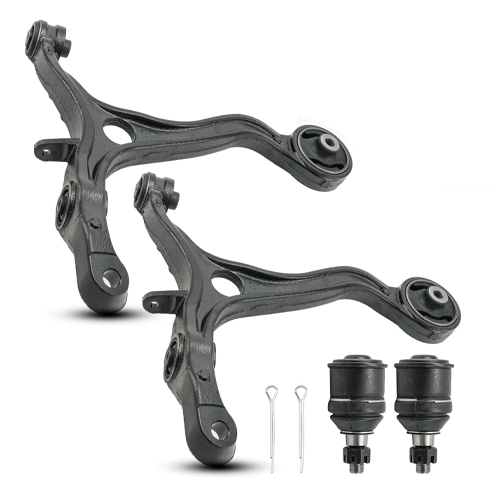
Chassis components create the physical pathways through which road forces travel from tire contact patches to the vehicle body and ultimately to occupants. Control arms, for instance, serve as critical links that define wheel motion paths while managing vertical, lateral, and longitudinal forces simultaneously. The geometry of these chassis components determines how impacts are distributed across multiple mounting points, preventing concentrated stress that would otherwise translate directly into cabin vibration. When a wheel encounters a bump, the control arm's pivot points and bushings work together to convert sharp vertical motion into smoother, more manageable movement that the springs and dampers can effectively control.
The stiffness characteristics of each chassis component within this pathway significantly affect both comfort and feedback quality. Overly rigid connections transmit every road texture directly to the cabin, creating harsh ride quality but providing precise steering response. Conversely, excessive compliance in chassis components filters out desirable road information along with unwanted harshness, resulting in vague, disconnected steering feel. Engineers carefully tune bushing durometer, control arm cross-sections, and subframe mounting compliance to achieve the optimal balance for each vehicle's intended character, whether that prioritizes comfort, sportiness, or load-carrying capability.
Damping Characteristics and Energy Dissipation
Beyond structural pathways, chassis components influence ride quality through their energy dissipation properties. Shock absorbers represent the most obvious damping elements, but numerous other chassis components contribute to controlling oscillations and vibrations. Bushing materials, particularly those using hydraulic or rubber compounds, provide frequency-dependent damping that complements shock absorber function. These elements preferentially absorb high-frequency vibrations from road texture while allowing lower-frequency suspension motion to occur relatively unimpeded, creating the smooth yet connected feel that characterizes well-engineered vehicles.
The interaction between various damping sources within the chassis system determines how quickly disturbances settle and how isolated occupants feel from road inputs. When chassis components feature appropriate damping characteristics, the vehicle returns smoothly to equilibrium after encountering bumps without excessive bouncing or harsh jolts. Worn or degraded chassis components lose their damping capacity, allowing vibrations to persist longer and transmit more directly into the cabin. This degradation often occurs gradually, making drivers unaware of how significantly their ride quality has deteriorated until they experience a properly functioning system.
Mass Distribution and Unsprung Weight Effects
The mass and positioning of chassis components fundamentally affect ride comfort through their influence on unsprung weight, which refers to components not supported by the suspension springs. Lighter unsprung components, including control arms, knuckles, and wheel assemblies, can respond more quickly to road irregularities without requiring as much force from springs and dampers. This responsiveness allows the suspension to maintain better tire contact with the road surface, improving both comfort and handling. Heavy chassis components in the unsprung mass create more aggressive impacts when encountering bumps because greater momentum must be absorbed by the suspension system.
Engineers increasingly use aluminum and advanced composite materials for chassis components to reduce unsprung weight without compromising strength. This weight reduction provides multiple benefits: improved ride quality over rough surfaces, enhanced steering response, reduced brake system stress, and better fuel efficiency. The distribution of mass within individual chassis components also matters, as components with mass concentrated near their pivot points create less rotational inertia and allow quicker suspension response to changing road conditions.
Geometric Relationships and Kinematic Behavior
Suspension Geometry Influence on Wheel Motion
The spatial arrangement of chassis components defines suspension geometry, which governs how wheels move through their travel range. Parameters like camber curves, roll center height, and anti-dive characteristics all stem from the positioning and lengths of control arms, links, and mounting points. These geometric relationships determine whether wheels remain perpendicular to the road during cornering and braking, maintaining optimal tire contact patches for grip and comfort. Well-designed suspension geometry allows chassis components to guide wheels through arcs that minimize tire scrubbing and body roll while maximizing passenger comfort.
Multi-link suspension designs employ additional chassis components to provide independent control over various aspects of wheel motion. Separate links can control camber, toe, and vertical position independently, allowing engineers to optimize each parameter without compromising others. This sophistication translates into superior ride comfort because wheels can better accommodate road irregularities while maintaining ideal alignment. Simpler suspension designs with fewer chassis components must accept geometric compromises that may sacrifice some comfort for cost or packaging efficiency, though modern engineering has made even basic designs remarkably competent.
Compliance Steer and Dynamic Alignment Changes
Chassis components influence road feedback through their elastic deformation under load, which creates compliance steer and dynamic alignment changes. When braking forces load the front suspension, control arm bushings deflect slightly, altering toe angles and creating subtle steering inputs that drivers perceive as feedback about traction conditions. Similarly, lateral cornering forces cause measurable deflection in chassis components, providing progressive handling characteristics and communicating grip levels to the driver. This engineered flexibility in chassis components allows vehicles to communicate their dynamic state without requiring drivers to interpret harsh vibrations or rigid responses.
The challenge lies in calibrating compliance characteristics so chassis components provide useful feedback without introducing undesirable behaviors. Excessive bushing compliance can allow wheels to steer themselves under braking or acceleration, creating instability and poor feedback. Insufficient compliance makes the chassis too rigid, transmitting impacts harshly while providing little progressive warning of approaching grip limits. Modern chassis components often feature asymmetric bushing designs that provide different stiffness in various directions, allowing engineers to fine-tune feedback characteristics for specific driving conditions.
Roll Stiffness Distribution and Body Control
The relative stiffness of front and rear chassis components, particularly anti-roll bars and control arm mounting systems, determines how body roll is distributed during cornering. This distribution affects both comfort and feedback by influencing how much the vehicle leans and how progressively that lean develops. Chassis components that allow moderate, controlled body roll provide occupants with clear feedback about cornering forces while maintaining comfort during straight-line driving. Excessively stiff chassis components eliminate body roll but transmit road irregularities harshly, while overly soft components allow excessive lean that feels disconnected and uncomfortable.
Engineers tune roll stiffness distribution through chassis components to achieve desired handling balance and feedback characteristics. Front-heavy roll stiffness creates understeer tendencies that provide stable, predictable handling with clear feedback about approaching limits. Rear-biased stiffness creates more neutral or oversteer characteristics that feel more responsive but require greater driver skill. These tuning choices profoundly affect the subjective driving experience and feedback quality, with chassis components serving as the physical means of implementing these engineering decisions.
Material Properties and Structural Dynamics
Bushing Compound Characteristics
The rubber and polyurethane compounds used in chassis component bushings dramatically influence both comfort and feedback through their viscoelastic properties. Softer rubber compounds provide excellent isolation from high-frequency vibrations and road noise, creating luxurious ride comfort but potentially vague steering feel. These materials achieve comfort through hysteresis, internally dissipating vibration energy as heat rather than transmitting it to the vehicle body. However, soft bushings also allow more deflection under cornering and braking loads, which can delay feedback and reduce precision.
Performance-oriented vehicles often use firmer polyurethane bushings in critical chassis components to improve feedback and response precision. These materials sacrifice some vibration isolation for more direct force transmission, allowing drivers to feel road conditions and vehicle dynamics more clearly. The trade-off becomes apparent on rough roads, where firmer bushings transmit more impact harshness. Some manufacturers now employ hydraulic bushings that use internal fluid chambers to provide frequency-dependent damping, combining the comfort of soft compounds at high frequencies with the control of firm bushings at lower frequencies relevant to handling dynamics.
Structural Resonance and Vibration Modes
Every chassis component has natural resonant frequencies at which it preferentially vibrates when excited by road inputs. Engineers must ensure these resonances fall outside the frequency ranges most objectionable to human perception, typically between 4 and 8 Hz for vertical motion and 1 to 2 Hz for horizontal motion. Chassis components designed with appropriate stiffness and mass characteristics avoid these sensitive ranges, preventing resonant amplification of road inputs that would create booming sensations or harsh ride quality.
Modern chassis components often incorporate features specifically designed to disrupt problematic vibration modes. Control arms may include additional mass at strategic locations to shift resonant frequencies, or use non-uniform cross-sections that prevent clean vibration patterns from developing. Subframes frequently employ rubber mounting isolators tuned to specific frequency ranges, preventing chassis component vibrations from coupling into the body structure where they would become audible and felt by occupants. This attention to structural dynamics in chassis components separates premium vehicles from economy offerings even when basic suspension geometry appears similar.
Material Fatigue and Long-Term Performance
The influence of chassis components on comfort and feedback changes as materials fatigue over vehicle lifetime. Rubber bushings harden with age and heat exposure, progressively transmitting more vibration and harshness while providing less damping. Metal components develop microcracking that alters their stiffness characteristics and can introduce unwanted compliance in load-bearing directions. These degradation patterns mean that chassis components gradually transform vehicle character, typically toward harsher ride quality and less precise feedback as miles accumulate.
Regular inspection and replacement of worn chassis components proves essential for maintaining intended ride quality and feedback characteristics. Many drivers adapt unconsciously to gradual degradation, never realizing how significantly their vehicle's behavior has changed until fresh chassis components restore original performance. This phenomenon explains why vehicles often feel remarkably improved after suspension overhauls even when no obvious failures were present, the cumulative effect of multiple slightly degraded chassis components being far more significant than anticipated.
System Integration and Tuning Philosophy
Holistic Chassis Component Coordination
Modern vehicles achieve their ride and feedback characteristics through careful coordination among all chassis components rather than relying on any single element. Springs, dampers, bushings, anti-roll bars, and structural components must work as an integrated system, with each element's characteristics selected to complement the others. A change to any individual chassis component requires corresponding adjustments throughout the system to maintain desired balance. This interdependence means that aftermarket modifications to individual chassis components often disappoint when installed in isolation, as they disrupt carefully engineered relationships.
Vehicle manufacturers develop comprehensive tuning matrices that define acceptable ranges for each chassis component parameter while maintaining system-level performance targets. These matrices account for interactions between components, ensuring that tolerance stack-up and part-to-part variation don't create vehicles that fall outside acceptable comfort and feedback ranges. The complexity of these interactions explains why apparently similar vehicles from different manufacturers can feel remarkably different despite using comparable individual chassis components, the integration philosophy and tuning priorities differing between engineering teams.
Adaptive Systems and Variable Characteristics
Advanced vehicles increasingly employ chassis components with variable characteristics that adapt to driving conditions and driver preferences. Electronically controlled dampers represent the most common example, adjusting damping forces in real-time to optimize comfort during cruising and enhance control during dynamic driving. These systems allow a single set of chassis components to provide broader performance envelopes than fixed components could achieve, delivering luxury-car comfort and sports-car feedback from the same hardware.
Future chassis components may incorporate even more sophisticated adaptability through active elements that generate forces rather than merely reacting to inputs. Active anti-roll bars already appear on premium vehicles, using electric motors to provide variable roll stiffness without compromising ride quality over uneven surfaces. Similar active technologies applied to other chassis components could eventually allow vehicles to completely decouple comfort and feedback, providing occupants with limousine-like isolation while simultaneously giving drivers the precise road feel of a sports car through synthesized steering feedback.
Calibration for Target Demographics and Use Cases
Engineers tune chassis components differently depending on target customer preferences and primary use cases. Luxury vehicles prioritize comfort through softer bushings, more compliant mounting systems, and sophisticated damping, accepting some reduction in ultimate handling precision. Sports vehicles emphasize feedback and control through stiffer chassis components that transmit more road information and resist deflection under high loads. Commercial vehicles must balance durability and load capacity with acceptable ride quality, leading to chassis components optimized for different priorities than passenger car applications.
These tuning philosophies reflect cultural and market preferences as much as engineering constraints. European manufacturers traditionally favor more communicative chassis components that provide direct feedback, while Asian manufacturers often prioritize comfort and refinement. American manufacturers historically emphasized soft, compliant chassis components for highway comfort, though this generalization has become less accurate as markets globalize. Understanding these tuning philosophies helps explain why chassis components with similar specifications can produce markedly different driving experiences across vehicle brands and regions.
Practical Implications for Vehicle Owners
Recognizing Degraded Chassis Component Performance
Vehicle owners should monitor several indicators that suggest chassis components have degraded beyond acceptable limits and require replacement. Increased impact harshness over bumps that were previously absorbed smoothly indicates worn bushings or damaged dampers. Steering that feels less precise or requires more corrections on straight roads suggests compliance changes in chassis components that control wheel alignment. Unusual tire wear patterns often result from chassis component wear allowing dynamic alignment changes that keep tires from tracking properly.
More subtle indicators include increased road noise transmission, particularly low-frequency rumbling or droning that wasn't previously noticeable. This acoustic degradation often stems from worn bushings in chassis components losing their vibration isolation properties. Vehicle behavior changes during braking or acceleration, such as pulling to one side or excessive dive and squat, similarly indicate that chassis components no longer control forces as designed. Addressing these symptoms promptly prevents accelerated wear to other components and maintains the ride quality and feedback the vehicle was engineered to provide.
Maintenance Strategies for Optimal Performance
Preserving chassis component performance requires proactive maintenance rather than waiting for obvious failures. Regular inspections should examine bushings for cracking, tearing, or excessive deflection under load. Control arms and links should be checked for deformation or play in ball joints and mounting points. Even when components appear superficially intact, age-related material degradation in bushings justifies replacement at intervals recommended by manufacturers or suspension specialists, typically every 80,000 to 120,000 miles depending on operating conditions.
Operating conditions significantly influence chassis component longevity and performance. Vehicles driven primarily on rough roads or in regions with extreme temperature variations experience accelerated bushing degradation. Salt exposure in winter climates attacks metal chassis components and accelerates corrosion that weakens structural integrity. Drivers should adjust maintenance intervals based on their specific conditions, inspecting chassis components more frequently when operating in harsh environments. Quality replacement parts using materials and designs equivalent to original equipment maintain intended ride and feedback characteristics better than economy alternatives that may sacrifice performance for cost savings.
Upgrade Considerations and Trade-offs
Many enthusiasts consider upgrading chassis components to alter their vehicle's ride and feedback characteristics. Such modifications require careful consideration of system-level effects and acceptance of inherent trade-offs. Installing firmer bushings improves feedback precision and reduces deflection under hard driving but increases vibration transmission and impact harshness. Lowering springs change suspension geometry in ways that may compromise ride quality even as they reduce body roll. Understanding how individual chassis components interact within the complete system helps predict whether modifications will achieve desired results or create unexpected compromises.
Successful chassis component upgrades typically involve coordinated changes to multiple elements rather than isolated modifications. Pairing firmer bushings with revalved dampers maintains ride quality while improving control, whereas firmer bushings alone may simply create harshness without corresponding dynamic benefits. Working with experienced suspension specialists who understand chassis component interactions and can test results objectively prevents disappointing outcomes. For most drivers, maintaining chassis components in like-new condition using quality replacement parts provides better results than attempting modifications, as original engineering represents sophisticated optimization that's difficult to improve without comprehensive system retuning.
FAQ
How often should chassis components be inspected for wear?
Chassis components should be visually inspected at least annually or every 12,000 miles, with more frequent checks recommended for vehicles operating in harsh conditions or those experiencing ride quality changes. Professional suspension inspections that include measurements for play and alignment verification should occur every 30,000 to 50,000 miles. Bushings and rubber components typically require replacement every 80,000 to 120,000 miles even without obvious damage, as material degradation affects performance before visible failures occur. Vehicles driven aggressively or on poor road surfaces may need more frequent attention to chassis components.
Can aftermarket chassis components improve both comfort and handling simultaneously?
High-quality aftermarket chassis components can potentially improve both comfort and handling compared to worn original parts, but improving both characteristics simultaneously beyond new factory specifications involves inherent trade-offs. Modern electronically adjustable dampers represent the most effective solution for expanding performance envelopes, allowing selectable characteristics that favor comfort or handling as desired. Fixed-rate aftermarket chassis components typically require choosing priorities, with some sacrifice in one area necessary to gain advantages in another. The sophisticated engineering in original chassis components means that wholesale improvements in all characteristics simultaneously prove difficult without moving to adaptive systems.
Why do vehicles feel different after replacing chassis components even without other modifications?
Vehicles often feel dramatically different after chassis component replacement because drivers had gradually adapted to progressive degradation without realizing how significantly performance had changed. Fresh bushings restore proper damping and force transmission that may have deteriorated over years, dramatically improving ride quality and feedback precision. New components also restore correct suspension geometry by eliminating play and deflection from worn parts, allowing the suspension to function as originally designed. The cumulative effect of multiple chassis components all functioning properly creates synergistic improvements that exceed the sum of individual component contributions, explaining why comprehensive suspension overhauls produce such noticeable results.
Do heavier vehicles require different chassis component characteristics than lighter vehicles?
Heavier vehicles require chassis components engineered with higher load capacities and different damping characteristics to achieve comparable ride quality and feedback. Springs must be stiffer to support additional weight without excessive suspension compression, which requires correspondingly firmer damping to control motion. Bushings in heavier vehicle chassis components typically use firmer compounds to resist deflection under higher loads, though engineers employ larger bushing dimensions and hydraulic designs to maintain adequate vibration isolation despite firmer materials. The fundamental principles governing how chassis components influence comfort and feedback remain consistent across weight classes, but specific component specifications and tuning parameters scale significantly with vehicle mass.
Table of Contents
- The Mechanical Foundation of Ride Quality
- Geometric Relationships and Kinematic Behavior
- Material Properties and Structural Dynamics
- System Integration and Tuning Philosophy
- Practical Implications for Vehicle Owners
-
FAQ
- How often should chassis components be inspected for wear?
- Can aftermarket chassis components improve both comfort and handling simultaneously?
- Why do vehicles feel different after replacing chassis components even without other modifications?
- Do heavier vehicles require different chassis component characteristics than lighter vehicles?