
 EN
EN

The commercial transport industry is undergoing a significant transformation, and at the heart of this shift lies the continuous evolution of chassis components. From long-haul freight carriers to urban delivery fleets, the structural and mechanical foundations of commercial vehicles are being redesigned to meet demands that simply did not exist a decade ago. Payload efficiency, driver safety, fuel economy, and regulatory compliance are all placing new pressure on how chassis components are engineered, manufactured, and maintained.
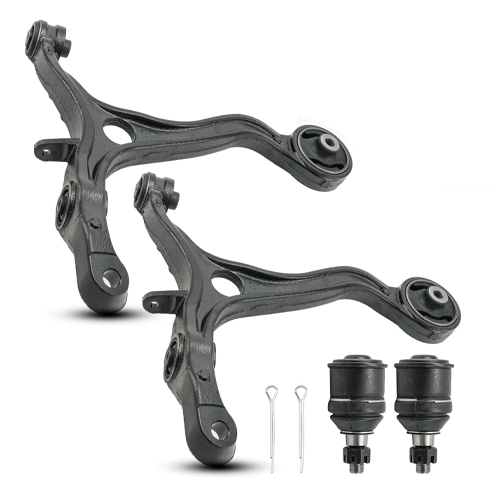
Understanding how chassis components are evolving requires looking beyond surface-level design changes. The real story is about how the entire philosophy of commercial vehicle architecture is shifting — from reactive maintenance models to predictive performance engineering, and from single-purpose structural parts to multifunctional integrated systems. This article explores the key dimensions of that evolution and what it means for fleet operators, procurement teams, and transport engineers making decisions today.
The Changing Demands Driving Chassis Component Innovation
Heavier Payloads and Structural Stress Tolerance
Commercial transport has always demanded durability, but the scale of that demand is growing. As logistics networks expand and e-commerce drives higher delivery volumes, vehicles are being loaded closer to their maximum gross vehicle weight ratings more frequently than before. This places sustained stress on chassis components that were historically designed for intermittent peak loads rather than continuous high-load operation.
Engineers are responding by rethinking the material composition and geometric design of load-bearing chassis components. High-strength steel alloys, advanced heat treatment processes, and finite element analysis during the design phase are now standard practice for components that must endure repeated stress cycles without fatigue failure. The goal is not just strength but consistent performance across the full service life of the vehicle.
Control arms, crossmembers, and subframe assemblies are among the chassis components most directly affected by this shift. Their geometry must now account for dynamic load distribution across varying road surfaces, not just static weight capacity. This has led to more complex component profiles that balance rigidity with controlled flex, reducing the risk of stress concentration at critical joints.
Urban Infrastructure and Road Condition Variability
Commercial vehicles operating in urban environments face a fundamentally different set of challenges compared to highway freight. Frequent stops, tight turning radii, uneven road surfaces, and speed bumps all create micro-stress events that accumulate over time in chassis components. City logistics fleets, in particular, are exposing design limitations that were not apparent in traditional long-haul applications.
This has pushed manufacturers to develop chassis components with improved vibration damping characteristics and tighter dimensional tolerances. Ball joints, bushings, and control arm assemblies are being engineered to maintain precise alignment even after thousands of low-speed impact cycles. The result is a new generation of chassis components that prioritize longevity in stop-and-go conditions rather than just peak load performance.
Material Science Advancements in Chassis Component Design
From Conventional Steel to Advanced Alloys
For most of the twentieth century, chassis components were predominantly fabricated from conventional mild steel. While reliable, this material carries a significant weight penalty that directly impacts fuel consumption and payload capacity. The push for lighter commercial vehicles without sacrificing structural integrity has accelerated the adoption of advanced high-strength steel, aluminum alloys, and in some applications, composite materials.
Advanced high-strength steel allows chassis components to be manufactured with thinner cross-sections while maintaining or exceeding the load ratings of heavier conventional parts. This weight reduction compounds across the entire vehicle — lighter chassis components mean lower unloaded vehicle weight, which translates directly into either improved fuel efficiency or increased legal payload capacity, both of which have measurable commercial value for fleet operators.
Aluminum alloys are increasingly used in suspension-related chassis components where unsprung weight reduction has a direct impact on ride quality and tire contact consistency. Lower unsprung mass allows suspension systems to respond more quickly to road surface changes, improving both handling stability and tire wear patterns — two factors that matter significantly in commercial transport economics.
Surface Treatment and Corrosion Resistance
Material selection alone does not determine the service life of chassis components. Surface treatment technology has advanced considerably, with multi-stage phosphating, electrophoretic coating, and zinc-nickel plating now being applied to components that previously relied on basic paint or simple galvanizing. These treatments are particularly important for chassis components exposed to road salt, moisture, and chemical contaminants in commercial operating environments.
Corrosion is one of the leading causes of premature chassis component failure in commercial fleets, particularly in regions with harsh winters or coastal operating conditions. Modern surface treatment protocols extend component service intervals and reduce the frequency of unplanned maintenance events, which is a critical operational consideration for fleets where vehicle downtime has a direct cost impact.
Integration of Precision Engineering and Tolerance Control
Tighter Manufacturing Tolerances and Their Operational Impact
The evolution of chassis components is not only about materials — it is equally about manufacturing precision. Computer numerical control machining, laser measurement systems, and automated quality inspection have enabled a new level of dimensional accuracy in chassis components that was not achievable with earlier production methods. This precision matters because even small deviations in component geometry can affect wheel alignment, steering response, and tire wear in commercial vehicles.
For fleet operators, tighter manufacturing tolerances in chassis components translate into more predictable maintenance intervals and more consistent vehicle behavior across a fleet. When every unit in a fleet has chassis components manufactured to the same precise specification, maintenance scheduling becomes more reliable and parts inventory management becomes more efficient. This consistency is a practical operational advantage that directly affects total cost of ownership.
Lower control arms and ball joint assemblies are a clear example of where precision engineering has made a measurable difference. These chassis components must maintain exact angular relationships under dynamic load conditions. Even minor manufacturing variation can cause premature wear at the ball joint interface, leading to handling instability and accelerated tire degradation. Modern precision manufacturing eliminates much of this variability.
Modular Design Principles in Commercial Chassis Architecture
Another significant trend in the evolution of chassis components is the shift toward modular design architectures. Rather than designing each component as a standalone part, engineers are increasingly developing chassis components as part of integrated subsystem modules that can be assembled, tested, and replaced as a unit. This approach simplifies both manufacturing and field maintenance.
Modular chassis components reduce diagnostic complexity during maintenance. When a suspension module is designed as an integrated assembly, technicians can identify and replace the affected module without needing to disassemble and inspect individual components one by one. This reduces labor time and minimizes the risk of reassembly errors that can compromise vehicle safety.
Electrification and Its Influence on Chassis Component Requirements
Battery Weight Distribution and Structural Adaptation
The transition toward electric commercial vehicles is creating entirely new requirements for chassis components. Battery packs in electric trucks and vans are significantly heavier than the powertrain components they replace, and their placement — typically low in the vehicle floor — fundamentally changes the load distribution that chassis components must manage. This has required a comprehensive rethinking of subframe geometry, crossmember placement, and suspension component ratings.
Chassis components in electric commercial vehicles must accommodate higher static loads at lower mounting points while also protecting battery enclosures from road debris impact and side intrusion. This dual requirement — structural support and protective function — is driving the development of chassis components with more complex cross-sectional profiles and integrated impact absorption features.
The increased vehicle weight associated with battery systems also places greater demands on braking-related chassis components. Brake caliper mounts, knuckle assemblies, and control arm geometry must all be recalibrated to handle the higher kinetic energy of loaded electric commercial vehicles, particularly in urban stop-and-go operating cycles where regenerative braking supplements but does not fully replace conventional friction braking.
Thermal Management Considerations for Chassis Components
Electric drivetrains generate different thermal profiles compared to internal combustion engines, and this affects the operating environment of nearby chassis components. Thermal cycling — the repeated expansion and contraction of materials as temperatures rise and fall — can accelerate fatigue in chassis components that were not designed with these specific thermal patterns in mind. Engineers are now incorporating thermal analysis into the design validation process for chassis components used in electric commercial vehicle platforms.
Material selection for chassis components in electric vehicles must account for thermal expansion coefficients, particularly at interfaces between dissimilar materials such as aluminum subframes and steel mounting hardware. Mismatched thermal expansion can cause joint loosening over time, which is why modern chassis components for electric platforms often incorporate thermally stable interface materials and revised fastener specifications.
Maintenance Evolution and the Role of Chassis Component Quality
Predictive Maintenance and Component Monitoring
Fleet maintenance strategies are shifting from scheduled replacement intervals toward condition-based and predictive maintenance models. This shift is only possible when chassis components are designed with monitoring compatibility in mind. Sensor integration points, acoustic emission characteristics, and measurable wear indicators are now being built into chassis components at the design stage rather than added as afterthoughts.
Telematics systems can now monitor vibration signatures from suspension-related chassis components and flag anomalies that indicate developing wear before a failure occurs. This capability depends on chassis components that produce consistent, measurable signals under normal operating conditions — a requirement that feeds back into manufacturing precision and material consistency standards.
For fleet operators, the ability to predict chassis component replacement needs before a breakdown occurs has significant financial implications. Unplanned vehicle downtime in commercial transport is far more costly than scheduled maintenance, both in direct repair costs and in lost revenue from vehicle unavailability. High-quality chassis components that support predictive maintenance strategies are therefore a direct contributor to fleet profitability.
Aftermarket Quality Standards and Replacement Considerations
As chassis components evolve in complexity and precision, the quality gap between well-engineered replacement parts and substandard alternatives is widening. Fleet operators and maintenance managers are increasingly recognizing that chassis components sourced purely on price can introduce performance variability that undermines the predictability that modern maintenance strategies depend on.
Replacement chassis components must meet the same dimensional, material, and surface treatment standards as the original parts to maintain vehicle handling characteristics and safety margins. This is particularly true for safety-critical components such as control arms with integrated ball joints, where dimensional deviation can directly affect steering geometry and vehicle stability under load.
The evolution of chassis components in commercial transport is therefore not just a story about original equipment design — it is equally about raising the quality floor across the entire supply chain, including the aftermarket replacement parts that keep commercial fleets operational between new vehicle purchases.
FAQ
What are the most critical chassis components in a commercial transport vehicle?
The most critical chassis components in commercial transport include the main frame rails, crossmembers, suspension control arms, ball joints, steering knuckles, and subframe assemblies. These parts collectively manage load distribution, steering precision, and road impact absorption. Their condition directly affects vehicle safety, tire wear, and handling stability, making them priority items in any fleet maintenance program.
How does vehicle electrification change the requirements for chassis components?
Electrification changes chassis component requirements in several important ways. Battery packs add significant weight at low mounting positions, requiring stronger and more precisely engineered subframes and control arms. Thermal cycling from electric drivetrains introduces new fatigue considerations. Braking-related chassis components must also be recalibrated to handle the higher kinetic energy of battery-loaded vehicles operating in urban stop-and-go conditions.
Why does manufacturing precision matter so much for chassis components?
Manufacturing precision in chassis components directly affects wheel alignment, steering response, and component service life. Even small dimensional deviations can cause uneven tire wear, handling instability, and accelerated joint wear. For commercial fleets, consistent precision across all replacement chassis components also enables more reliable maintenance scheduling and reduces the risk of unexpected failures that cause costly vehicle downtime.
How can fleet operators evaluate the quality of replacement chassis components?
Fleet operators should evaluate replacement chassis components based on material certification, dimensional conformance to original equipment specifications, surface treatment quality, and the supplier's quality control documentation. Components that include verifiable hardness ratings, corrosion resistance test data, and dimensional inspection reports provide a more reliable basis for quality assessment than price alone. Consistency across batches is also an important indicator of manufacturing process control.
Table of Contents
- The Changing Demands Driving Chassis Component Innovation
- Material Science Advancements in Chassis Component Design
- Integration of Precision Engineering and Tolerance Control
- Electrification and Its Influence on Chassis Component Requirements
- Maintenance Evolution and the Role of Chassis Component Quality
-
FAQ
- What are the most critical chassis components in a commercial transport vehicle?
- How does vehicle electrification change the requirements for chassis components?
- Why does manufacturing precision matter so much for chassis components?
- How can fleet operators evaluate the quality of replacement chassis components?