
 EN
EN
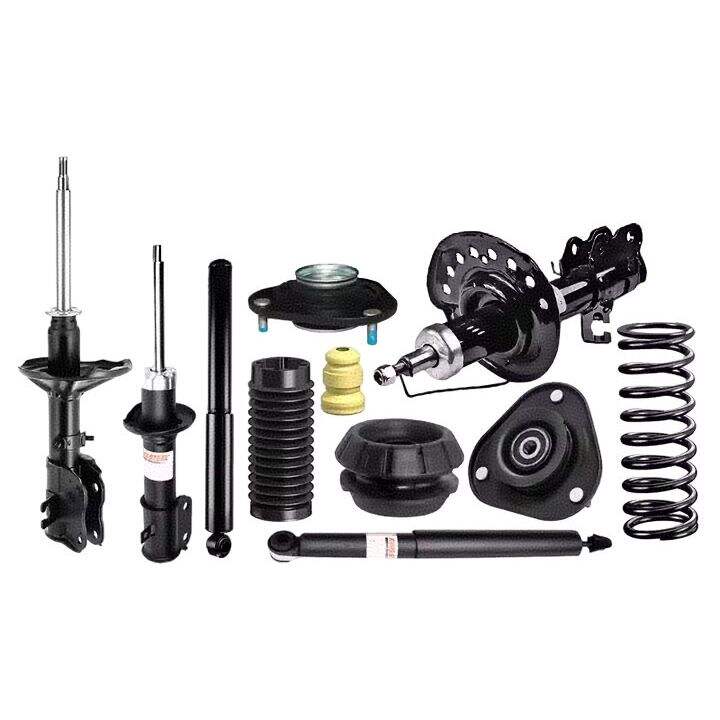
When you drive over a pothole, a gravel path, or a road riddled with bumps and dips, the experience inside the cabin reflects the health of one critical component: the shock absorbers. These hydraulic devices are not simply comfort accessories — they are fundamental to how well a vehicle maintains contact with the road surface. Without properly functioning shock absorbers, even modest road irregularities can translate into significant instability, reduced steering precision, and increased stopping distances.
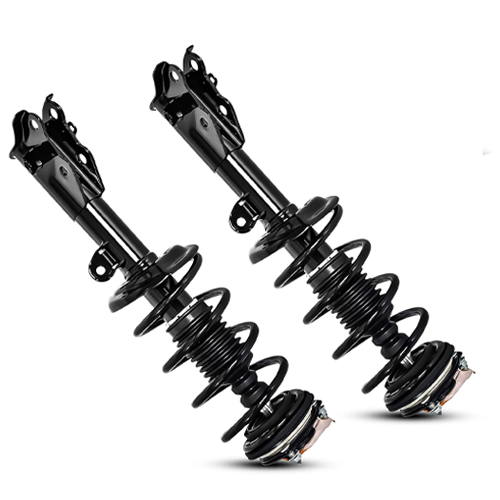
Understanding how shock absorbers influence driving stability on uneven roads requires looking at their core mechanical function, how they interact with other suspension components, and what happens when they begin to degrade. This article walks through the mechanics, the real-world consequences of worn shock absorbers, and the key signals drivers and fleet managers should watch for when evaluating suspension health. Whether you manage a single vehicle or an entire fleet, the role of shock absorbers in road-holding performance deserves careful attention.
The Mechanical Role of Shock Absorbers in Suspension Systems
How Shock Absorbers Convert Motion Into Heat
Shock absorbers work by converting kinetic energy — the energy produced by wheel movement over road irregularities — into thermal energy, which is then dissipated through hydraulic fluid. When a wheel encounters a bump, it moves upward, compressing the suspension spring. Without a dampening device, the spring would continue oscillating up and down far beyond the initial impact. Shock absorbers control this oscillation by restricting the flow of hydraulic fluid through small internal valves, creating resistance that slows the spring's rebound movement.
This dampening action is what keeps the tire pressed firmly against the road surface rather than bouncing away from it. The more consistent the tire-to-road contact, the better the vehicle can respond to steering inputs and braking forces. Shock absorbers do not carry the vehicle's weight — that is the job of the springs — but they regulate how quickly and smoothly the springs respond to road inputs, which is the essence of driving stability.
The internal design of shock absorbers typically includes a piston moving through a fluid-filled cylinder. As the piston moves, fluid passes through calibrated orifices. The resistance created by this flow determines how firm or soft the damping feel is. Performance-oriented shock absorbers often use multi-stage valving to provide different levels of resistance depending on whether the wheel is moving slowly over gentle undulations or rapidly over sharp impacts.
The Relationship Between Shock Absorbers and Tire Contact Patch
The tire contact patch — the small area where a tire actually touches the road — is the only interface between a moving vehicle and the surface it travels on. Shock absorbers directly influence the size and consistency of this contact patch on uneven roads. When shock absorbers are functioning correctly, the tire follows the road contour closely, maintaining maximum contact area for grip, cornering force, and braking traction.
On rough or broken surfaces, a tire attached to a well-dampened suspension system will track the surface profile smoothly. Without adequate dampening from shock absorbers, the tire lifts and slaps the road repeatedly in a phenomenon known as 'wheel hop.' During wheel hop, the contact patch shrinks or disappears entirely for fractions of a second, eliminating grip during those moments. This is particularly dangerous during cornering or emergency braking on deteriorated road surfaces.
Shock absorbers also interact with alignment geometry. When the wheel moves vertically through its travel range, its camber and toe angles change in predictable ways defined by the suspension geometry. Properly dampened movement keeps the wheel within its optimal geometry window, while excessive oscillation caused by worn shock absorbers pushes the tire into suboptimal alignment positions during dynamic maneuvers.
How Uneven Roads Stress Shock Absorbers and Affect Vehicle Stability
Types of Road Irregularities and Their Suspension Impact
Not all road irregularities challenge shock absorbers in the same way. Sharp impacts — such as hitting a pothole edge or a raised manhole cover — create high-frequency, high-amplitude inputs that demand rapid response from the dampening system. Gradual undulations, such as rolling hills or long surface waves, create low-frequency inputs that test the shock absorbers' ability to manage slow, sustained wheel travel. Each type places different demands on the valving and fluid dynamics inside the shock absorbers.
Corrugated roads — surfaces with regular ridges spaced closely together — are particularly demanding because they create resonance conditions. If the frequency of the road corrugations matches the natural oscillation frequency of the suspension, shock absorbers must work continuously to prevent the amplitude of wheel movement from building up. Inadequate dampening in these conditions can result in the vehicle skipping across the surface rather than tracking through it.
Loose gravel, off-road tracks, and deteriorated urban pavement combine multiple irregularity types simultaneously. In these environments, shock absorbers must manage inputs across a wide frequency spectrum while also dealing with lateral as well as vertical forces. This is why the condition of shock absorbers has an outsized impact on vehicle behavior precisely in the environments where drivers most need reliable handling.
Stability Consequences When Shock Absorbers Lose Effectiveness
As shock absorbers wear, their internal seals degrade and fluid leaks past the piston, reducing the resistance they generate. The result is a progressively softer dampening response that allows the suspension to oscillate more freely. On smooth roads, this degradation may go largely unnoticed. On uneven roads, however, the effects become pronounced and potentially dangerous.
A vehicle with degraded shock absorbers will exhibit excessive body roll during cornering, nose dive under braking, and squat under acceleration — all amplified significantly when the road surface adds additional vertical inputs. Steering feedback becomes vague because the front tires are not maintaining consistent road contact. Braking distances increase measurably because the tire contact patch fluctuates during the stop, reducing average grip.
Studies conducted in controlled test environments have consistently shown that vehicles with worn shock absorbers require longer stopping distances on rough surfaces compared to vehicles with new shock absorbers, even when tire condition is held constant. This demonstrates that shock absorbers are not peripheral comfort components — they are active safety contributors, particularly on the deteriorated road surfaces that represent a large portion of real-world driving conditions.
Shock Absorbers and Their Interaction With Other Stability Systems
Integration With Electronic Stability and ABS Systems
Modern vehicles increasingly rely on electronic stability control systems, anti-lock braking systems, and traction control systems to manage vehicle dynamics. These systems depend on accurate, responsive wheel behavior to function correctly. Shock absorbers play a foundational role in making these electronic systems effective. When dampening is inadequate, the wheels behave unpredictably, and the sensors feeding data to electronic systems receive inconsistent signals.
Anti-lock braking systems, for example, work by detecting individual wheel deceleration rates and modulating brake pressure to prevent lock-up. When shock absorbers are worn and a wheel is hopping over an uneven surface, the ABS sensor may interpret the intermittent loss of grip as a lock-up event and incorrectly release brake pressure at a critical moment. This interaction between mechanical suspension health and electronic system performance is often overlooked in routine maintenance discussions.
Similarly, electronic stability control relies on consistent tire contact to generate the yaw corrections needed to keep a vehicle on its intended path. A vehicle with healthy shock absorbers responds to electronic interventions quickly and predictably. A vehicle with compromised shock absorbers may require larger, more frequent corrections, potentially exhausting the system's capacity on highly irregular surfaces.
Coil Springs, Strut Assemblies, and Shock Absorber Co-Function
In many modern vehicles, shock absorbers are integrated with coil springs into a single strut assembly. This design — commonly called a MacPherson strut — combines the spring's load-bearing function with the shock absorbers' dampening function into one compact unit. The health of the entire assembly matters, not just the hydraulic component in isolation. A worn spring mount or a cracked spring can alter how forces are transmitted through the shock absorbers, reducing their effectiveness even if the hydraulic internals are still serviceable.
When evaluating whether shock absorbers are contributing fully to driving stability, technicians must assess the entire strut assembly as a system. Replacing just the hydraulic damper while leaving a worn coil spring or degraded upper mount in place will yield incomplete results. This is particularly relevant for vehicles used heavily on rough roads, where all components of the strut assembly experience accelerated wear simultaneously.
Aftermarket strut assemblies that include both the shock absorbers and the coil spring as a matched unit offer a practical advantage here. Because the components are engineered and calibrated together, their combined performance on uneven roads is more consistent than mixing new and old components. For high-mileage vehicles or those operating in demanding road environments, a complete strut assembly replacement often delivers noticeably better driving stability than a partial component swap.
Recognizing When Shock Absorbers Need Replacement for Road Safety
Physical and Performance Warning Signs
Drivers and fleet operators should monitor several specific indicators that suggest shock absorbers have deteriorated to a point where driving stability is compromised. Visible oil streaking on the exterior of the shock absorber body is a direct sign that internal seals have failed and fluid is escaping. While a light film of moisture is sometimes acceptable, a wet, oily appearance covering a significant portion of the damper body indicates meaningful fluid loss.
Performance-based warning signs include excessive vehicle bounce after passing over a bump, a feeling that the vehicle continues to move vertically even after the road levels out, and increased body roll during normal lane changes. On uneven roads specifically, drivers may notice that the steering wheel vibrates more than usual, or that the vehicle feels loose and imprecise compared to its earlier behavior. These sensations reflect the loss of dampening control that shock absorbers normally provide.
Uneven tire wear is another significant indicator. When shock absorbers no longer keep the tire firmly pressed to the road surface, the tire wears in irregular patterns — often showing 'cupping' or 'scalloping' across the tread face. This wear pattern reflects the repeated lift-and-slap contact cycle caused by insufficient dampening. Once identified, this wear pattern confirms that the shock absorbers have been underperforming for some time.
Replacement Intervals and Road Condition Considerations
General industry guidance suggests that shock absorbers should be inspected thoroughly at around 50,000 miles and evaluated for replacement based on condition, vehicle use, and road environment. However, vehicles regularly driven on rough, unpaved, or heavily deteriorated roads may require replacement significantly earlier. The severity of the road environment is the dominant factor in shock absorber service life, not simply mileage alone.
Fleet managers operating vehicles in urban delivery environments — where pothole-heavy streets are the norm — often find that shock absorbers reach the end of their service life well ahead of manufacturer-estimated intervals. Proactive inspection schedules that include visual checks of the damper bodies and bounce tests at regular service intervals help prevent the gradual degradation of driving stability that accompanies worn shock absorbers.
For passenger vehicles used primarily on smooth highways, shock absorbers may remain functionally adequate for longer periods. Even in these cases, the eventual onset of wear is inevitable, and periodic checks remain important. The key principle is that shock absorbers should be replaced before their condition begins to meaningfully compromise driving stability, not after a safety-critical event has already occurred.
FAQ
How do shock absorbers directly affect braking performance on rough roads?
Shock absorbers maintain consistent tire contact with the road surface during braking. On rough roads, worn shock absorbers allow the tires to bounce, which reduces the effective grip available for braking. This increases stopping distances because the tires are not in full contact with the road throughout the braking event. Healthy shock absorbers keep the tires planted, allowing braking systems to operate at maximum efficiency even on uneven surfaces.
Can worn shock absorbers cause problems with electronic stability systems?
Yes. Electronic stability control and ABS systems rely on consistent wheel behavior and predictable tire contact to function correctly. When shock absorbers are worn, wheels can behave erratically on uneven surfaces, sending inconsistent signals to electronic control modules. This can cause these systems to intervene unnecessarily or fail to intervene accurately, reducing their effectiveness precisely when road conditions make them most important.
Is it necessary to replace shock absorbers in pairs?
Replacing shock absorbers in axle pairs — both front or both rear simultaneously — is strongly recommended. If only one side is replaced, the vehicle will have mismatched dampening characteristics, which can create uneven handling behavior and instability during cornering or braking. Since both shock absorbers on an axle typically accumulate similar wear over the same period, replacing them together restores balanced performance and avoids a secondary replacement shortly after the first.
How can I tell if my shock absorbers are causing the instability I feel on uneven roads?
A simple bounce test can provide an initial indication. Push down firmly on each corner of the vehicle and release — the vehicle should rebound once and settle quickly. If it continues to bounce multiple times, the shock absorbers on that corner are likely worn. Other signs include visible oil leaks on the damper body, unusual tire wear patterns, increased body roll, and a floating or imprecise feeling when driving over rough surfaces. A professional inspection will confirm the condition of the shock absorbers and the overall suspension system.