
 EN
EN
Durability in automotive chassis components determines vehicle lifespan, safety performance, and maintenance costs across passenger cars, commercial trucks, and performance vehicles. Engineers and procurement specialists face constant pressure to balance material cost, manufacturing efficiency, and structural integrity when selecting chassis components that withstand daily stress cycles, environmental corrosion, and extreme operating conditions. Understanding which materials and design approaches deliver measurable durability improvements enables better specification decisions, reduces warranty claims, and ensures consistent performance over extended service intervals.
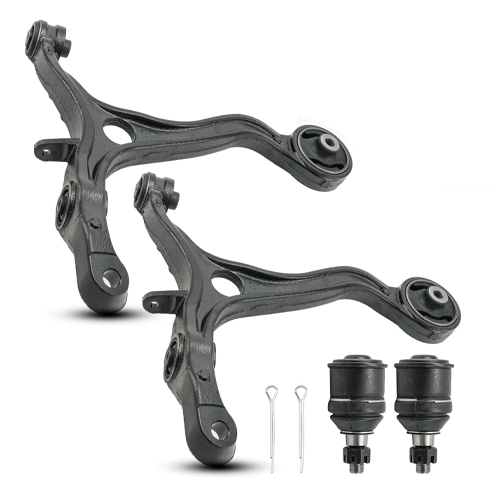
Modern automotive chassis systems integrate control arms, ball joints, tie rods, sway bar links, and subframe assemblies that collectively manage suspension geometry, steering precision, and load distribution during acceleration, braking, and cornering. Each component experiences distinct mechanical stresses—tensile loads in control arms during compression, torsional stress in sway bar links during body roll, and impact forces in ball joints during pothole encounters. Material selection and geometric design directly influence how effectively chassis components resist fatigue failure, elastic deformation, and environmental degradation throughout their operational life. This analysis explores specific material properties, design features, and manufacturing processes that quantifiably enhance chassis component durability based on engineering principles and field performance data.
Material Selection Fundamentals for Chassis Component Longevity
High-Strength Steel Alloys and Fatigue Resistance
High-strength low-alloy steel remains the dominant material for chassis components due to its exceptional strength-to-weight ratio, cost efficiency, and predictable fatigue behavior under cyclic loading. HSLA steels with yield strengths between 350-550 MPa provide adequate structural capacity while maintaining ductility necessary for impact energy absorption. The microstructure of these alloys—typically ferrite-pearlite or bainitic formations—determines crack initiation resistance and propagation rates during fatigue cycling. Control arms manufactured from HSLA steel demonstrate service lives exceeding 150,000 miles when properly designed, compared to conventional mild steel variants that may exhibit cracking at 80,000-100,000 miles under equivalent loading conditions.
Advanced high-strength steels incorporating microalloying elements like vanadium, niobium, and titanium achieve yield strengths above 600 MPa while preserving weldability and formability required for complex chassis component geometries. These precipitation-strengthened grades enable engineers to reduce component mass by 15-25% while maintaining equivalent structural performance, particularly beneficial in control arms and subframe members where unsprung weight reduction improves ride quality. The endurance limit—the stress threshold below which infinite fatigue life occurs—increases proportionally with tensile strength in steel alloys, making AHSS particularly effective in chassis components subjected to constant vibrational loads during highway driving.
Aluminum Alloy Applications and Corrosion Protection
Aluminum alloys offer compelling advantages in chassis components requiring significant weight reduction without compromising structural stiffness, particularly in performance vehicles and electric platforms where mass optimization directly impacts range and handling dynamics. The 6000-series alloys, especially 6061-T6 and 6082-T6, provide yield strengths approaching 275 MPa with excellent extrusion characteristics for control arms and subframe structures. Their natural oxide layer formation delivers inherent corrosion resistance superior to uncoated steel, critical in regions using road salt during winter months. However, aluminum's lower elastic modulus compared to steel necessitates larger cross-sectional geometries to achieve equivalent stiffness, partially offsetting weight savings.
Forged aluminum chassis components exhibit grain flow alignment that follows component geometry, significantly enhancing fatigue strength in critical stress concentration areas like control arm bushing mounting points and ball joint attachment bosses. This directional strength allows 7000-series aluminum alloys to achieve fatigue performance approaching that of HSLA steel at 40% lower mass. Surface treatments including anodizing and conversion coating further improve corrosion resistance and paint adhesion, extending service life in harsh environments. The primary limitation involves galvanic corrosion potential when aluminum chassis components interface with steel fasteners or adjacent structures, requiring isolation measures through non-conductive coatings or barrier materials to prevent accelerated electrochemical degradation.
Composite Materials and Hybrid Construction Methods
Advanced composite materials including carbon fiber reinforced polymers and glass fiber composites offer exceptional specific strength and fatigue resistance for specialized chassis components in motorsport and premium automotive applications. CFRP control arms demonstrate 60% mass reduction compared to steel equivalents while maintaining comparable stiffness and superior vibration damping characteristics. The anisotropic nature of fiber-reinforced composites allows engineers to optimize fiber orientation along primary load paths, concentrating material strength precisely where stress analysis indicates maximum demand. This directional design capability proves particularly valuable in chassis components experiencing complex multi-axial loading during combined braking and cornering events.
Hybrid construction approaches combining steel or aluminum structural cores with composite overwrap layers represent an emerging strategy for high-performance chassis components. These designs leverage the high bearing strength and damage tolerance of metallic materials for bushing interfaces and attachment points while utilizing composite sections in structural spans to maximize stiffness-to-weight ratios. Manufacturing complexity and material costs currently limit composite chassis components to specialized applications, though automated fiber placement and resin transfer molding processes continue reducing production expenses. The absence of corrosion in polymer matrix composites eliminates degradation mechanisms that limit metal component lifespan in salt-exposed environments, potentially justifying higher initial costs through extended replacement intervals.
Design Geometry Principles That Enhance Structural Durability
Stress Concentration Mitigation Through Optimized Transitions
Geometric stress concentrations represent the primary failure initiation sites in chassis components, occurring at cross-sectional changes, hole edges, and fillet transitions where material continuity disrupts and localized stress amplification occurs. Fatigue cracks typically nucleate at these high-stress regions after accumulating cyclic damage over thousands of load cycles. Strategic design modifications including generous fillet radii, gradual taper transitions, and reinforcement bosses around fastener holes reduce stress concentration factors from values exceeding 3.0 in sharp transitions to below 1.5 in optimized geometries. Control arms incorporating smooth radius transitions between the bushing mounting tube and structural arm section demonstrate 40-60% longer fatigue lives compared to designs with abrupt cross-sectional changes.
Finite element analysis enables engineers to visualize stress distribution throughout chassis components under representative loading conditions and identify concentration points requiring geometric refinement. Modern topology optimization algorithms automatically generate material layouts that minimize stress concentrations while satisfying stiffness and packaging constraints, producing organic geometries that traditional design approaches might overlook. These computational methods prove especially valuable for complex chassis components like multi-link suspension arms that experience simultaneous tension, compression, bending, and torsion during vehicle operation. Implementation of FEA-optimized geometries in production control arms has documented fatigue life improvements exceeding 100% compared to conventional rectangular cross-section designs while utilizing equivalent material mass.
Section Modulus Optimization and Load Path Engineering
The section modulus—a geometric property quantifying a component's resistance to bending stress—directly influences chassis component durability under flexural loading conditions. Tubular and box-section geometries provide superior section modulus compared to solid sections at equivalent mass, explaining their prevalence in control arms and lateral links. A circular tube with 40mm outer diameter and 3mm wall thickness achieves approximately four times the bending stiffness of a solid rod with equivalent cross-sectional area. This geometric efficiency allows engineers to design chassis components that resist elastic deformation during normal operation while maintaining adequate material thickness for fatigue resistance at critical attachment points.
Load path engineering involves arranging material to align with principal stress trajectories, ensuring forces flow through the component structure with minimal stress concentration or bending moment generation. Chassis components designed with clear load paths from attachment point to attachment point exhibit more uniform stress distribution and reduced peak stress values compared to geometries where forces must traverse indirect routes involving multiple direction changes. Hydroformed tube construction enables complex three-dimensional geometries that follow optimal load paths while maintaining closed-section structural efficiency. Control arms utilizing hydroformed construction demonstrate 30% improved torsional rigidity and 25% enhanced fatigue performance compared to stamped and welded assemblies, though tooling costs favor hydroforming for higher production volumes exceeding 50,000 units annually.
Bushing Interface Design and Compliance Optimization
The interface between chassis components and elastomeric bushings critically influences both durability and functional performance, as improper bushing retention design generates fretting wear, stress concentration, and premature component failure. Bushing mounting tubes require sufficient wall thickness and internal surface finish to prevent elastic deformation under press-fit installation forces and operational radial loads. Inadequate tube stiffness allows bushing migration and micro-movement that accelerates wear and generates noise. Industry standards specify minimum wall thickness ratios of 0.08-0.12 times the tube diameter for steel control arms, ensuring the mounting tube maintains dimensional stability throughout the component service life.
Compliance characteristics designed into chassis components through bushing selection and mounting geometry orientation significantly affect durability by controlling motion paths and limiting stress development during suspension articulation. Strategically oriented bushings with directional stiffness properties allow controlled deflection in specific planes while restricting motion in others, preventing binding forces that would otherwise generate excessive stress in rigid metallic structures. This compliance also isolates chassis components from high-frequency vibrations transmitted through tire contact patch irregularities, reducing the number of stress cycles accumulated and extending fatigue life. Advanced bushing designs incorporating hydraulic damping elements further attenuate dynamic loads and protect chassis components from impact-induced stress spikes during pothole encounters or aggressive driving maneuvers.
Surface Treatment and Protection Technologies
Corrosion Prevention Through Coating Systems
Environmental corrosion represents a primary durability threat for steel chassis components, particularly in regions where road salt application, coastal salt spray, or industrial atmospheric pollutants accelerate oxidation processes. Unprotected steel surfaces develop rust that progressively reduces effective cross-sectional area, creates stress concentration sites at corrosion pit boundaries, and compromises structural integrity over multi-year service periods. Electrocoat primer systems provide comprehensive coverage including recessed areas and internal cavities that conventional spray coatings cannot adequately protect. The cathodic electrodeposition process deposits uniform coating thickness between 15-25 microns that serves as an effective moisture barrier and corrosion inhibitor, extending chassis component life by 5-8 years in severe salt exposure environments.
Zinc-based coating technologies including hot-dip galvanizing, electrogalvanizing, and zinc-rich primers deliver sacrificial corrosion protection where the zinc preferentially oxidizes instead of the underlying steel substrate. Galvanized chassis components demonstrate corrosion resistance sufficient for 12-15 year vehicle lifespans in moderate climate zones without visible rust formation. The coating thickness directly correlates with protection duration—hot-dip galvanizing deposits 50-80 micron zinc layers providing longer protection than electrogalvanizing's 5-10 micron films, though the thinner electrodeposited coatings offer superior surface finish and dimensional control for precision chassis components with tight tolerance requirements. Powder coating topcoats applied over zinc primer layers create multi-barrier protection systems that combine sacrificial and barrier corrosion resistance mechanisms.
Shot Peening for Fatigue Life Enhancement
Shot peening introduces beneficial compressive residual stresses into chassis component surface layers through controlled high-velocity impact of spherical media against the metal surface. These compressive stresses, typically reaching 400-600 MPa in the near-surface region, counteract tensile stresses that develop during operational loading and inhibit fatigue crack initiation and propagation. The compressive stress layer extends 0.1-0.3mm below the surface—sufficient depth to protect against the shallow surface cracks that initiate most fatigue failures in chassis components. Peened control arms and suspension links demonstrate 50-80% increases in fatigue endurance limits compared to unpeened components, enabling either extended service life or reduced safety factors in structural calculations.
The effectiveness of shot peening depends on process parameters including media size, impact velocity, coverage percentage, and peening intensity measured through Almen strip deflection. Over-peening generates excessive surface roughness and potential subsurface damage that negates durability benefits, while insufficient peening intensity fails to develop adequate compressive stress depth. Critical areas including fillet transitions, hole edges, and geometric discontinuities receive targeted peening to address high-stress concentration zones identified through finite element analysis. Combination treatments incorporating shot peening followed by surface coating application provide synergistic durability enhancement—the compressive stress layer inhibits crack formation while the coating prevents corrosion initiation, together extending chassis component service life beyond what either treatment achieves independently.
Heat Treatment Optimization for Material Properties
Heat treatment processes fundamentally alter the microstructure and mechanical properties of steel chassis components, enabling engineers to optimize strength, ductility, and fatigue resistance for specific applications. Quenching and tempering treatments applied to medium-carbon steel control arms develop martensitic-tempered martensitic microstructures achieving yield strengths between 600-900 MPa while maintaining sufficient ductility for impact energy absorption. The rapid quenching process following austenitization creates the hard martensitic phase, while subsequent tempering reduces brittleness and adjusts strength-toughness balance to application requirements. Properly heat-treated chassis components resist permanent deformation under overload conditions while tolerating manufacturing stresses during press-fitting operations without cracking.
Induction hardening selectively strengthens localized areas of chassis components requiring enhanced wear resistance or fatigue performance without affecting bulk material properties. Ball joint mounting bosses and bushing retention surfaces benefit from induction-hardened zones that resist fretting wear and maintain dimensional stability under cyclic loading. The shallow hardening depth—typically 2-5mm—concentrates strengthening where needed while preserving core ductility that prevents brittle fracture under impact loading. Case hardening through carburizing or nitriding processes similarly enhances surface properties while maintaining tough cores, though these diffusion-based treatments require longer processing times and higher temperatures compared to induction methods. Selection among heat treatment approaches balances performance requirements, component geometry, production volume economics, and distortion control needs for precision chassis components.
Manufacturing Process Impacts on Component Durability
Forging Versus Casting Quality Considerations
Forging processes produce chassis components with superior mechanical properties and structural integrity compared to cast equivalents due to grain flow refinement, porosity elimination, and work hardening effects. The compressive deformation during forging breaks down the as-cast dendritic structure and creates elongated grain orientations that follow component contours, concentrating strength along primary load paths. Forged control arms exhibit 20-35% higher fatigue strength than cast designs of identical geometry and nominal composition because forging eliminates the microshrinkage porosity and inclusion content inherent in casting solidification. The absence of internal voids prevents crack initiation sites and ensures consistent material properties throughout the component cross-section.
Precision forging techniques including closed-die and isothermal forging produce near-net-shape chassis components requiring minimal machining, reducing manufacturing costs while preserving beneficial surface conditions and compressive residual stresses developed during forming. These advanced forging methods achieve dimensional tolerances within ±0.5mm for critical features like bushing bore diameters and ball joint taper seats, eliminating extensive machining that removes work-hardened surface layers. Investment casting and low-pressure permanent mold casting technologies offer acceptable quality for certain chassis components when design complexity or production volume economics favor casting over forging. Modern casting simulation software minimizes porosity through optimized gating and riser design, while heat treatment and hot isostatic pressing further densify castings to approach wrought material properties.
Welding Quality and Joint Design Principles
Welded joints in fabricated chassis components represent potential weak points where durability failures concentrate if improper welding procedures, inadequate joint design, or quality control deficiencies compromise structural integrity. The heat-affected zone adjacent to fusion welds experiences microstructural changes and residual stress development that reduce local fatigue resistance compared to base material properties. Full-penetration groove welds with proper joint preparation and controlled heat input minimize HAZ degradation and develop joint strength approaching parent material capacity. Chassis components utilizing robotic MIG or laser welding with real-time quality monitoring achieve consistent weld properties and defect-free joints essential for durability in safety-critical suspension applications.
Joint geometry significantly influences welded chassis component durability through load transfer efficiency and stress concentration management. Continuous welds along the entire joint length distribute stresses more uniformly than intermittent stitch welds that create stress concentrations at weld terminations. Overlapping joint configurations generally provide superior fatigue performance compared to butt joints because load transfer occurs through bearing rather than relying entirely on weld throat strength. Post-weld treatments including stress relief annealing, weld toe grinding to remove geometric stress concentrations, and peening of weld toes enhance fatigue resistance of welded chassis assemblies. Control arms and subframe structures incorporating these weld quality measures demonstrate field durability equivalent to single-piece forged alternatives while offering design flexibility and economic advantages for complex geometries or lower production volumes.
Machining Practices and Surface Integrity
Machining operations that create precision features in chassis components—including bushing bores, ball joint tapers, and fastener holes—must preserve surface integrity to prevent premature fatigue failures initiating from machining-induced defects. Cutting parameters including feed rate, cutting speed, and tool geometry affect subsurface residual stresses and microstructural alterations in the machined surface layer. Aggressive machining with worn tools generates tensile residual stresses and work-hardened surface layers with reduced ductility that accelerate crack initiation. Controlled machining practices using sharp tools, appropriate cutting fluids, and optimized parameters create compressive residual stress states that enhance fatigue resistance of machined features.
Surface finish specifications for chassis component interfaces balance functional requirements against cost considerations, as excessively tight tolerances increase manufacturing expenses without proportional durability benefits. Bushing mounting bores typically specify surface roughness values between 1.6-3.2 micrometers Ra to provide adequate friction for press-fit retention while allowing controlled bushing installation without galling. Ball joint taper seats require finer finishes around 0.8-1.6 micrometers Ra to ensure uniform contact pressure distribution and prevent fretting corrosion at the interface. Honing and burnishing finishing operations after initial machining improve surface quality while introducing beneficial compressive residual stresses. These secondary processes add manufacturing cost but deliver measurable durability improvements in highly stressed chassis component features where fatigue failures preferentially initiate.
Validation Testing and Performance Verification Methods
Accelerated Durability Testing Protocols
Laboratory durability testing subjects chassis components to accelerated loading cycles that simulate years of field service within compressed timeframes, enabling design validation before production release. Multi-axis test fixtures apply representative force combinations including vertical wheel loads, longitudinal braking forces, and lateral cornering loads while cycling through load spectra derived from instrumented vehicle measurements on proving grounds. Target test durations typically specify 1-3 million load cycles corresponding to 10-15 year vehicle lifespans under normal usage patterns. Component designs that complete accelerated testing without crack initiation or permanent deformation demonstrate adequate durability margins for production implementation.
Corrosion resistance validation employs salt spray testing per ASTM B117 standards, exposing coated chassis components to continuous 5% sodium chloride fog at 35°C for 240-1000 hours depending on target service environment severity. Coating systems must demonstrate minimal substrate corrosion and less than 5mm coating delamination from scribe marks to qualify for production use. Combined corrosion-fatigue testing subjects chassis components to alternating salt spray exposure and mechanical load cycling, simulating realistic field conditions where corrosion pits develop and serve as fatigue crack initiation sites. This synergistic testing reveals coating system weaknesses that individual corrosion or fatigue tests might not expose, providing higher confidence in predicted field durability.
Field Performance Monitoring and Failure Analysis
Warranty return analysis and field failure investigation provide essential feedback for chassis component design refinement and material selection validation. Systematic examination of failed components identifies failure modes—whether fatigue cracking, corrosion perforation, wear, or plastic deformation—and locates failure initiation sites that indicate design weaknesses or manufacturing defects. Metallurgical analysis including fractography, microstructural examination, and mechanical property testing determines whether failures resulted from material deficiencies, improper heat treatment, or stress conditions exceeding design assumptions. This failure analysis information directly informs design modifications including material upgrades, geometry optimization, or manufacturing process improvements that prevent recurrence in subsequent production.
Instrumented fleet vehicles equipped with strain gauges, accelerometers, and data acquisition systems capture actual operating loads and usage patterns that validate or challenge engineering assumptions used during initial chassis component design. Real-world load data frequently reveals usage conditions more severe than standard test specifications assume, particularly for vehicles operated in extreme climates, poor road conditions, or demanding commercial applications. Comparison between predicted and measured stress levels identifies areas where design margins prove insufficient or excessive, enabling optimized material distribution that improves durability without unnecessary mass or cost. Continuous field performance monitoring combined with systematic failure analysis creates feedback loops that progressively enhance chassis component designs through multiple product generations.
FAQ
What is the typical service life expectancy for modern chassis components?
Modern chassis components designed with appropriate materials and manufacturing quality typically achieve service lives between 100,000-150,000 miles in passenger car applications under normal driving conditions. Control arms and suspension links utilizing high-strength steel construction with proper corrosion protection and optimized geometry routinely exceed 10-year service intervals before replacement becomes necessary. Premium vehicles incorporating forged aluminum components may demonstrate extended durability approaching 200,000 miles due to superior fatigue resistance and corrosion immunity. Commercial vehicle chassis components experience shorter service lives due to higher loading intensity, often requiring replacement at 80,000-100,000 miles. Actual durability varies significantly based on operating environment severity, maintenance practices, and individual driving behavior patterns that affect cumulative stress exposure.
How do engineers determine appropriate material selection for different chassis components?
Material selection for chassis components follows systematic engineering analysis considering loading conditions, required stiffness, mass constraints, environmental exposure, and cost targets. Control arms experiencing primarily tensile-compressive loading with moderate corrosion exposure typically utilize high-strength steel for optimal cost-performance balance. Components requiring maximum weight reduction like upper control arms in performance vehicles may justify aluminum alloys despite higher material costs. Ball joint housings subjected to high bearing stresses and impact loading generally employ forged steel for superior strength and damage tolerance. Engineers evaluate candidate materials using finite element analysis to predict stress distributions, then compare predicted maximum stresses against material fatigue limits with appropriate safety factors. The selection process balances multiple criteria including strength-to-weight ratio, manufacturing feasibility, corrosion resistance requirements, and total lifecycle costs encompassing both production expenses and warranty exposure.
Can chassis component design modifications reduce vehicle noise and vibration issues?
Design optimization of chassis components significantly influences vehicle noise, vibration, and harshness characteristics through multiple mechanisms including structural stiffness control, vibration isolation, and resonance frequency management. Increased control arm section modulus and optimized geometry reduce elastic deflection during dynamic loading, minimizing structure-borne vibration transmission to the vehicle body. Strategic bushing compliance tuning isolates high-frequency road inputs while maintaining adequate control of suspension geometry during handling maneuvers. Material selection affects vibration damping—aluminum alloys and composite materials exhibit superior internal damping compared to steel, attenuating vibration amplitudes more effectively. Engineers employ dynamic finite element analysis to predict component natural frequencies and ensure separation from excitation frequencies generated by tire non-uniformity, driveline rotation, and road surface inputs. Chassis components designed with NVH considerations demonstrate improved ride comfort and reduced interior noise levels without compromising structural durability or handling performance.
What quality inspection methods verify chassis component manufacturing consistency?
Manufacturing quality verification for chassis components employs multiple inspection techniques ensuring dimensional accuracy, material properties, and surface condition meet engineering specifications. Coordinate measuring machines verify critical dimensions including bushing bore diameters, ball joint taper angles, and mounting hole positions with measurement uncertainty below 0.01mm. Ultrasonic testing detects internal defects like porosity in cast components or incomplete weld penetration in fabricated assemblies. Magnetic particle or dye penetrant inspection reveals surface cracks and material discontinuities invisible to visual examination. Hardness testing validates heat treatment effectiveness and material strength compliance. Statistical process control monitors dimensional variation trends and triggers corrective action when manufacturing processes drift toward specification limits. Destructive testing of sample components from each production batch verifies mechanical properties and fatigue performance through laboratory testing. This comprehensive quality system ensures chassis components achieve designed durability and safety performance throughout production runs spanning millions of units.
Table of Contents
- Material Selection Fundamentals for Chassis Component Longevity
- Design Geometry Principles That Enhance Structural Durability
- Surface Treatment and Protection Technologies
- Manufacturing Process Impacts on Component Durability
- Validation Testing and Performance Verification Methods
-
FAQ
- What is the typical service life expectancy for modern chassis components?
- How do engineers determine appropriate material selection for different chassis components?
- Can chassis component design modifications reduce vehicle noise and vibration issues?
- What quality inspection methods verify chassis component manufacturing consistency?