
 EN
EN
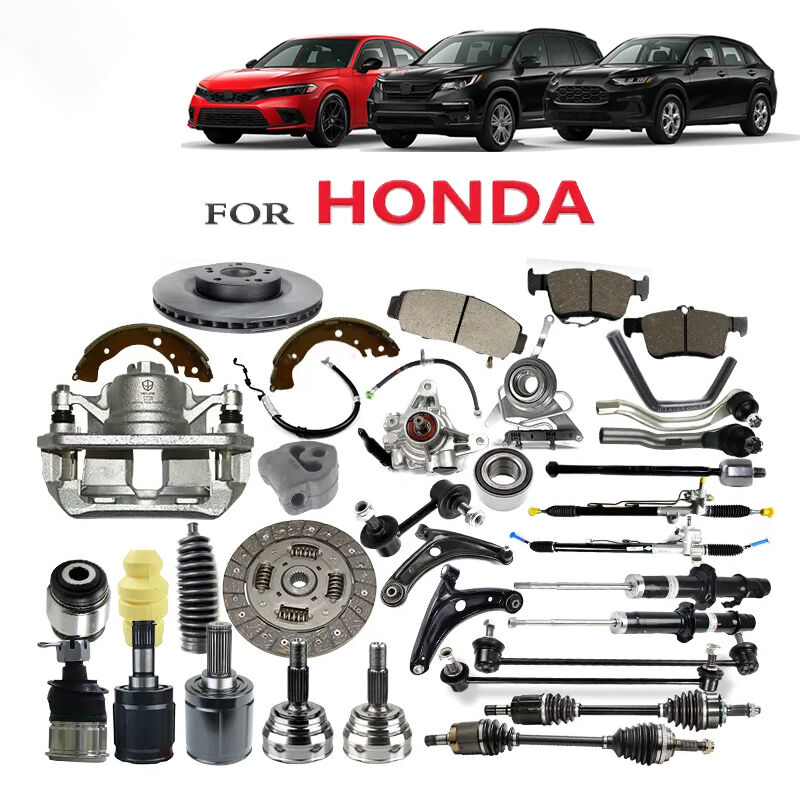
The global auto parts industry is undergoing one of its most profound transformations in decades. Forces ranging from geopolitical tension and pandemic-era disruptions to rapid electrification and shifting consumer demands are compelling manufacturers, distributors, and retailers to fundamentally rethink how auto parts are sourced, produced, and delivered. What was once a relatively stable, regionally organized supply network has evolved into a complex, interdependent global ecosystem where a single disruption in one country can ripple across continents and halt production lines thousands of miles away.
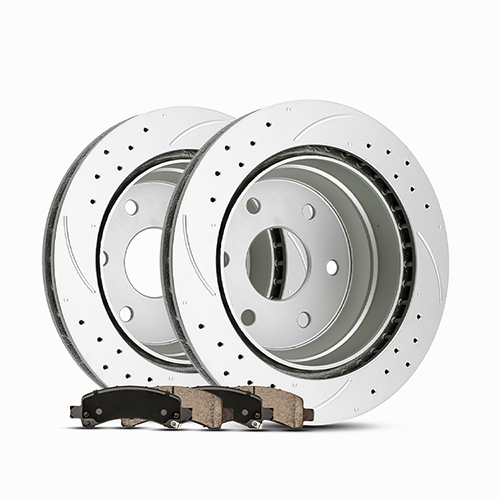
Understanding why global supply chains are reshaping the auto parts sector requires looking beyond surface-level logistics. It demands a close examination of the structural, economic, and technological forces that are simultaneously pulling the industry in multiple directions at once. From premium safety components like brake kits to the most basic mechanical fasteners, every category of auto parts is experiencing supply chain pressure in ways that have lasting consequences for pricing, availability, and quality standards worldwide.
The Structural Shift in Global Auto Parts Sourcing
From Regional Clusters to Global Networks
For much of the twentieth century, auto parts manufacturing was concentrated in regional industrial clusters. North America, Western Europe, and Japan each maintained largely self-sufficient networks where parts were made close to where vehicles were assembled. This geographic proximity kept lead times short, quality oversight manageable, and logistics costs predictable. However, economic liberalization, trade agreements, and the rise of low-cost manufacturing destinations began dissolving these regional boundaries steadily from the 1990s onward.
Today, a single auto parts product may involve raw materials extracted in one continent, components machined in another, subassemblies produced in a third country, and final packaging completed in a fourth. This dispersion has lowered unit costs significantly, making auto parts more affordable for end consumers. However, it has also introduced layers of operational complexity and vulnerability that were not present when supply chains were geographically compact.
The implications of this structural shift are not abstract. When a critical semiconductor plant in Southeast Asia faces a shutdown, brake system components and electronic auto parts across dozens of vehicle models can become unavailable overnight. When port congestion spikes in a major transit hub, scheduled deliveries of auto parts to dealerships, repair shops, and aftermarket distributors can be delayed by weeks. The industry has learned, often painfully, that global scale comes with global risk.
The Role of Emerging Market Suppliers in Reshaping Auto Parts Trade
Emerging market suppliers, particularly across Asia and Eastern Europe, have become indispensable contributors to the global auto parts supply chain. Their ability to manufacture at competitive price points while continuously improving quality standards has made them attractive partners for both OEM and aftermarket channels. This shift has created a more multipolar industry structure, where sourcing decisions are driven by a blend of cost, capability, and strategic risk management.
However, the growing reliance on emerging market auto parts suppliers has also intensified scrutiny around consistency, certification compliance, and intellectual property protection. Buyers must now navigate complex qualification processes and ongoing quality audits that did not exist when supply chains were more localized. This elevated due diligence requirement is itself reshaping how procurement teams within the auto parts industry operate and invest their resources.
Furthermore, currency fluctuations, raw material inflation, and evolving labor costs in emerging markets periodically disrupt the cost assumptions that originally made global sourcing attractive. Auto parts distributors are increasingly factoring these macro-economic variables into their long-term supplier strategies, often pursuing multi-source arrangements to hedge against single-point supply risks.
Geopolitical Pressures and Their Impact on Auto Parts Trade Flows
Trade Policy Uncertainty and Tariff Volatility
Trade tensions between major economies have introduced significant uncertainty into auto parts sourcing decisions. Tariff escalations, import restrictions, and shifting bilateral trade agreements have forced companies to reassess long-standing supplier relationships and explore alternative sourcing geographies. In some cases, tariffs on imported auto parts have been high enough to erode the cost advantages that originally justified global sourcing strategies, triggering near-shoring or reshoring initiatives.
For businesses that operate across multiple markets, navigating the patchwork of trade regulations governing auto parts imports and exports has become a significant operational burden. Compliance teams must stay current with rules-of-origin requirements, harmonized tariff schedules, and bilateral trade agreement provisions that can change with relatively little notice. A misstep in tariff classification can result in unexpected duties that make a formerly profitable auto parts product line economically unviable.
Beyond direct tariff costs, the uncertainty itself has a chilling effect on long-term investment decisions. Manufacturers considering new facilities or equipment upgrades for auto parts production face difficulty forecasting the trade environment their products will operate in over a five-to-ten-year horizon. This uncertainty is encouraging many firms to build greater supply chain flexibility rather than optimizing purely for lowest cost, fundamentally changing the economics of the sector.
Supply Security and the Push for Strategic Stockpiling
The pandemic years demonstrated in stark terms how quickly just-in-time inventory models can fail when global logistics networks are disrupted. For the auto parts industry, this experience catalyzed a broad reassessment of inventory strategy. Companies that had been operating with minimal safety stock found themselves unable to fulfill orders for weeks or months, losing revenue and damaging customer relationships in ways that took years to repair.
In response, many auto parts distributors and manufacturers have rebuilt inventory buffers for critical product lines, accepting higher carrying costs as the price of supply security. Safety components such as brake pads, rotors, and suspension parts have received particular attention, given that their unavailability has immediate consequences for vehicle safety and workshop scheduling. Balancing the cost of strategic stockpiling against the risk of stockouts has become a central challenge for auto parts supply chain managers.
Geopolitical risk analysis has consequently become a more formal discipline within auto parts procurement. Companies are mapping their supply chains down to the sub-tier supplier level, identifying geographic concentrations of risk, and developing contingency sourcing plans. This level of supply chain visibility, once considered an optional best practice, is increasingly viewed as a core operational competency in the modern auto parts industry.
Technology Disruption and Its Effect on Auto Parts Supply Chains
Electrification and the Changing Composition of Auto Parts
The accelerating transition toward electric vehicles is reshaping demand patterns for auto parts in ways that have profound supply chain implications. Many traditional auto parts categories are seeing declining long-term demand as internal combustion engines are phased out, while entirely new categories of components are emerging to support electric drivetrains, battery systems, and advanced driver assistance systems. This shift is creating a two-speed market within the auto parts industry, where legacy and next-generation products must coexist in an increasingly complex distribution ecosystem.
Supply chains for the new categories of electric vehicle auto parts are in many cases still immature, with limited supplier options, longer lead times, and less price stability than established component categories. Battery management systems, high-voltage connectors, and thermal management auto parts are subject to intense supply competition and capacity constraints that bear little resemblance to the dynamics governing conventional drivetrain components. Companies that have historically focused on traditional auto parts must now build entirely new supplier relationships and technical competencies.
Meanwhile, the established categories of auto parts that serve the large existing fleet of internal combustion vehicles remain critically important for aftermarket channels. Brake systems, engine components, filters, and driveline parts continue to represent substantial revenue for the industry and will do so for many years as the vehicle park turns over gradually. Managing this transition period, where demand for both conventional and new-technology auto parts must be served simultaneously, is one of the defining supply chain challenges of the current era.
Digital Transformation in Auto Parts Procurement and Distribution
Digital technology is reshaping how auto parts are sourced, ordered, tracked, and delivered at every level of the supply chain. E-commerce platforms have enabled auto parts buyers to compare specifications, pricing, and availability across a global supplier base in real time, fundamentally shifting negotiating dynamics and price discovery mechanisms. What once required weeks of correspondence and catalog requests can now be accomplished in minutes through digital procurement portals.
Advanced data analytics and artificial intelligence are being deployed to forecast auto parts demand more accurately, enabling smarter inventory positioning and reducing both stockout and overstock scenarios. Machine learning models can identify seasonal demand patterns, correlate parts consumption with vehicle age distributions in specific markets, and flag supply risks before they materialize into shortages. These capabilities are particularly valuable for high-velocity auto parts categories where getting inventory levels wrong has immediate financial consequences.
Blockchain and track-and-trace technologies are also gaining traction as tools for combating counterfeit auto parts and ensuring supply chain transparency. Counterfeit components represent a genuine safety risk and a significant commercial threat to legitimate suppliers. Digital provenance systems that record the chain of custody for auto parts from raw material to end consumer provide a level of traceability that was previously impossible, and their adoption is being driven by both regulatory pressure and customer demand for authenticity assurance.
Resilience Strategies Redefining the Auto Parts Industry
Near-Shoring and Regional Supply Chain Consolidation
In response to the vulnerabilities exposed by global supply chain disruptions, many companies in the auto parts sector are pursuing near-shoring strategies that place production or distribution capacity closer to key end markets. This approach trades some of the cost efficiency associated with distant low-cost manufacturing for greater responsiveness, shorter lead times, and reduced exposure to transcontinental logistics risk. For certain auto parts categories, particularly those with high urgency such as safety-critical components, the premium for near-shored supply is increasingly seen as justified.
Regional supply chain consolidation is also being driven by customer expectations. Repair shops, dealerships, and fleet operators expect rapid availability of auto parts to minimize vehicle downtime. As vehicle owners become less tolerant of extended wait times, the competitive pressure on auto parts distributors to maintain regional inventory depth is intensifying. Those who can reliably deliver critical auto parts within hours rather than days are gaining a durable competitive advantage over those dependent on extended global replenishment cycles.
Government policy is reinforcing this trend in several major markets, with industrial policy initiatives offering incentives for domestic or regional auto parts production. These policies are prompting both established players and new entrants to invest in manufacturing capacity that might not have been economically attractive under pure free-market conditions. The long-term effect is a gradual rebalancing of the auto parts supply chain toward greater regionalization, even as global trade networks persist in parallel.
Supplier Diversification and Risk Hedging in Auto Parts Procurement
Sole-source supplier dependency, once accepted as the natural consequence of scale-driven procurement strategies, has become widely recognized as an unacceptable vulnerability in auto parts supply chains. Companies across the industry are actively pursuing dual-source or multi-source arrangements for critical auto parts categories, accepting potentially higher unit costs in exchange for supply continuity assurance. This shift reflects a fundamental revaluation of risk in supply chain design that has been accelerated by recent global disruptions.
Supplier diversification strategies require significant investment in supplier qualification, relationship management, and technical collaboration. For complex auto parts such as precision-machined components, rubber seals, or electronic assemblies, qualifying a second or third source is not a simple administrative exercise. It involves engineering validation, quality system audits, regulatory compliance verification, and often significant lead time before the alternative supplier can be relied upon for production volumes.
Despite these costs, the business case for supplier diversification in auto parts procurement has rarely been stronger. Companies that invested in building resilient, diversified supply bases before recent disruptions were able to maintain service levels and capture market share from competitors who found themselves unable to fulfill orders. This real-world evidence has made supplier diversification a boardroom-level priority for many companies operating across the auto parts value chain.
FAQ
Why are auto parts prices rising despite global sourcing?
Auto parts prices are rising due to a combination of raw material inflation, elevated freight costs, labor market pressures, and currency volatility in major sourcing regions. While global sourcing was originally pursued to reduce costs, the macroeconomic environment of recent years has partially eroded those savings. Additionally, companies are investing more in supply chain resilience measures such as strategic stockpiling and supplier diversification, which add cost that is ultimately reflected in auto parts pricing.
How does electrification affect traditional auto parts supply chains?
Electrification reduces long-term demand for many traditional auto parts categories while simultaneously creating demand for entirely new component types associated with electric drivetrains and battery systems. This transition forces auto parts suppliers to manage two parallel product portfolios with very different demand trajectories, supply chain structures, and technical requirements. Companies must balance continued investment in conventional auto parts for the large existing vehicle fleet while building capabilities for the emerging electric vehicle segment.
What role does digital technology play in modernizing auto parts supply chains?
Digital technology is enabling more accurate demand forecasting, real-time inventory visibility, faster procurement cycles, and improved counterfeit detection across auto parts supply chains. E-commerce platforms have expanded market access for both buyers and sellers, while data analytics tools help companies make smarter stocking decisions. Track-and-trace technologies are also improving quality assurance by providing verifiable provenance records for auto parts from production to point of sale.
Why is supplier diversification becoming a priority for auto parts companies?
Recent global disruptions demonstrated that sole-source dependency creates severe supply continuity risks in the auto parts industry. Companies that relied on a single supplier for critical components often found themselves unable to fulfill orders during shortages, resulting in revenue loss and damaged customer relationships. Supplier diversification, while operationally complex and initially costly, provides the supply continuity assurance that is now considered essential for competitiveness in the auto parts market.