
 EN
EN
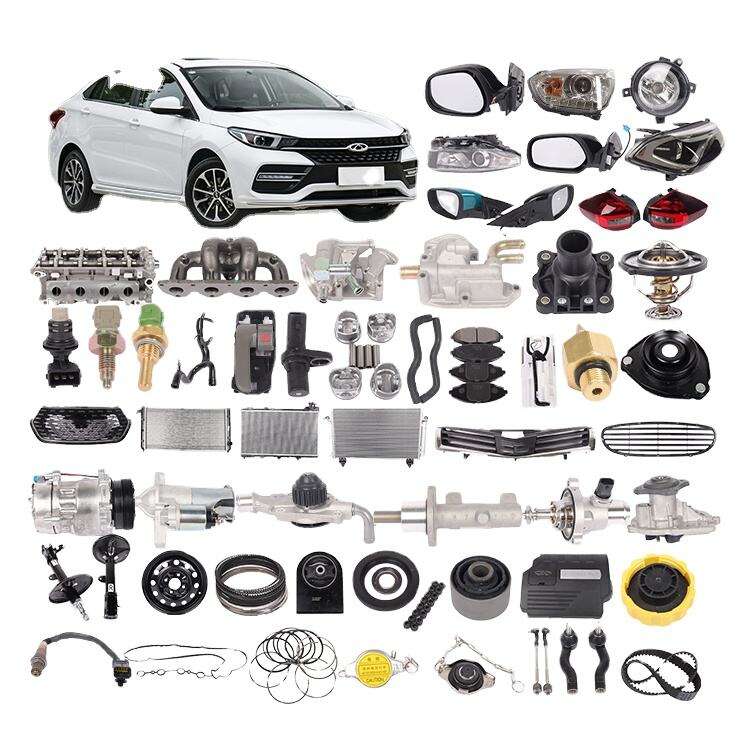
Vehicle safety remains one of the most critical considerations in automotive engineering, with body components serving as the first and last line of defense during collisions. These structural elements form the physical barrier between occupants and external forces, determining whether a crash results in minor injuries or catastrophic outcomes. Understanding how body components impact vehicle safety and crash performance reveals the sophisticated engineering principles that transform raw materials into life-saving structures, guiding manufacturers, fleet managers, and safety professionals in evaluating vehicle integrity and protective capabilities.
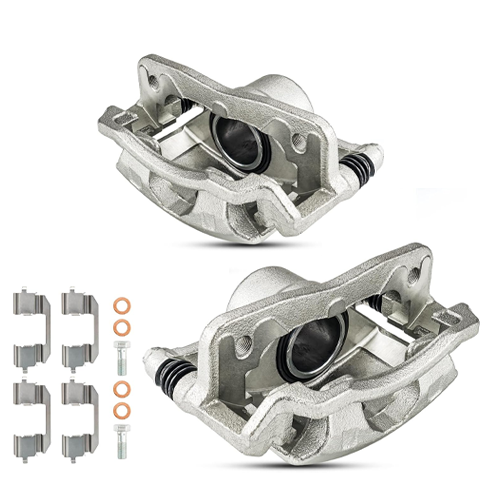
The relationship between body components and crash performance extends beyond simple material strength, encompassing energy absorption pathways, structural load distribution, and occupant compartment preservation. Modern vehicles integrate multiple body component systems that work synergistically during impact events, each designed to activate at specific force thresholds and deformation stages. From the initial contact point through the final energy dissipation phase, body components orchestrate a controlled collapse sequence that maximizes survival space while minimizing intrusion into passenger zones, making their design and condition fundamental to real-world safety outcomes.
Structural Architecture and Energy Management Principles
Load Path Design in Body Component Systems
The fundamental mechanism through which body components impact safety begins with load path engineering, where forces generated during collisions travel through predetermined structural channels. These pathways route impact energy away from the passenger compartment and toward designed crumple zones, preventing direct force transmission to occupants. The effectiveness of this system depends entirely on the geometric configuration and material properties of body components forming these channels, including frame rails, rocker panels, and cross-members that create continuous force-bearing routes from impact point to energy absorption zones.
When properly engineered, body components create hierarchical energy management systems where outer structures deform first, absorbing kinetic energy through plastic deformation before transferring remaining forces to stiffer inner structures. This sequential activation prevents overwhelming any single component while maximizing total energy absorption capacity. The dimensional accuracy and connection integrity of body components directly determine whether loads follow intended paths or find unplanned routes that could compromise occupant protection, making manufacturing precision and assembly quality critical factors in crash performance.
Advanced vehicles employ multi-material strategies where different body components utilize materials optimized for their specific role in the load path hierarchy. High-strength steel body components in the central safety cage resist deformation to maintain survival space, while more ductile aluminum or composite body components in frontal and rear structures absorb energy through controlled crushing. This material differentiation allows engineers to tune crash performance for various impact scenarios, with each body component contributing its unique mechanical properties at precisely the right moment during collision sequences.
Crumple Zone Functionality and Body Component Interaction
Crumple zones represent perhaps the most visible manifestation of how body components impact crash performance, transforming kinetic energy into deformation work that extends collision duration and reduces peak deceleration forces. The body components comprising these zones feature carefully calculated wall thicknesses, fold initiators, and geometric triggers that promote orderly, progressive collapse rather than chaotic buckling. This controlled deformation absorbs maximum energy per unit of crush distance, optimizing the trade-off between impact severity reduction and available crush space before reaching the passenger compartment.
The interaction between different body components within crumple zones creates synergistic effects that exceed the protective capacity of individual elements. Longitudinal rails work with cross-members to prevent lateral buckling while allowing axial compression, while connection points between body components act as programmed weak points that initiate folding at predetermined force levels. When one component begins collapsing, it triggers load redistribution that activates adjacent body components in sequence, creating a cascade of energy absorption events that collectively manage impact forces more effectively than any single structure could achieve independently.
Real-world crash performance depends heavily on maintaining the as-designed condition of all body components in crumple zones, as even minor damage from previous impacts or corrosion can alter collapse behavior unpredictably. A compromised body component may fold prematurely, reducing total energy absorption, or resist deformation beyond its design threshold, creating hard points that generate dangerous deceleration spikes. This sensitivity to component condition explains why collision-damaged vehicles often receive diminished safety ratings even after repair, since restoring appearance does not necessarily restore the precise mechanical properties that govern crash performance.
Passenger Compartment Integrity and Intrusion Prevention
Safety Cage Architecture in Body Component Design
While crumple zones manage energy through deformation, the passenger compartment relies on rigid body components that resist collapse to preserve survival space for occupants. These safety cage body components typically utilize ultra-high-strength steels or reinforced composite structures engineered to withstand forces many times greater than those experienced by outer crush structures. The A-pillars, B-pillars, roof rails, and floor pan comprise interconnected body components forming a protective shell that maintains its geometry even as surrounding structures collapse during severe impacts.
The effectiveness of safety cage body components in preventing intrusion depends on creating continuous load-bearing rings that distribute forces around door openings and window frames rather than allowing concentration at specific points. Door sills and roof rails function as primary body components in these rings, connecting pillar structures into unified systems that resist bending and twisting motions during offset and side impacts. The junction points between these body components represent critical weak spots where engineering must ensure adequate strength and stiffness to prevent separation or excessive deformation that would compromise the entire protective structure.
Modern safety cage designs increasingly incorporate reinforcement body components strategically placed to address specific crash scenarios identified through computer simulation and physical testing. Side impact beams within doors, roof reinforcements for rollover protection, and dashboard cross-beams all represent body components added specifically to enhance compartment integrity under loading conditions that standard structural elements cannot adequately resist. These supplementary body components typically activate only during severe impacts, remaining inactive during normal driving while standing ready to provide critical protection when collision forces exceed design thresholds for primary structural elements.
Door Structure and Side Impact Protection
Side impact collisions present unique challenges for body components since minimal crush space exists between exterior panels and occupants, leaving little distance for energy absorption before intrusion reaches passengers. Door body components therefore employ specialized designs combining outer resistance beams with internal reinforcement structures and energy-absorbing padding that work together to slow intruding objects while maintaining door frame integrity. The outer beam, typically the strongest individual body component in the door assembly, resists initial penetration and distributes impact forces across larger areas to prevent concentrated loading.
The connection between door body components and the surrounding safety cage determines how effectively side impact forces transfer to stronger structural elements rather than simply pushing doors into the passenger compartment. Robust hinges and latch mechanisms act as critical body components that must maintain engagement during collision, channeling forces into door frames, B-pillars, and rocker panels where greater structural capacity exists. When these connection body components fail prematurely, the door assembly becomes a projectile rather than a protective barrier, eliminating the resistance that even marginally delays intrusion and provides crucial milliseconds for restraint systems to position occupants away from impact zones.
Advanced side protection systems integrate door body components with sensors and deployable structures that respond actively during crashes. Side curtain airbags mount to roof rail body components, while thorax bags deploy from seat or door panel body components, creating temporary barriers that supplement structural protection with energy-absorbing cushioning. The coordination between these active safety devices and the underlying body components determines overall effectiveness, since airbag deployment timing must synchronize with structural deformation rates to position protective barriers correctly relative to occupant motion during impact sequences.
Material Selection and Body Component Performance Characteristics
Steel Grades and Their Influence on Crash Behavior
The material composition of body components fundamentally determines their mechanical response during crashes, with steel remaining the dominant choice due to its favorable combination of strength, ductility, and cost-effectiveness. Mild steel body components in older vehicles provide adequate energy absorption through large deformations but require substantial material thickness to achieve necessary strength levels, adding weight that compromises fuel efficiency and handling. Modern high-strength steel body components achieve superior performance by utilizing advanced metallurgy that increases yield strength while maintaining sufficient elongation for controlled energy absorption during crushing.
Ultra-high-strength steel body components in safety cage structures achieve tensile strengths exceeding 1500 megapascals, providing exceptional resistance to intrusion while allowing thinner gauges that reduce weight. These body components typically undergo hot stamping processes that create microstructures resistant to both elastic deformation and premature fracture, maintaining protective geometry under extreme loading. However, the same properties that make these body components excellent for intrusion resistance render them less suitable for crumple zones, where energy absorption requires plastic deformation that ultra-high-strength steels resist, demonstrating how material selection must align precisely with functional requirements for each body component location.
The transition zones between different steel grades represent critical considerations in body component design, as mismatches in strength and stiffness can create stress concentrations that initiate unexpected failure modes during crashes. Engineers carefully design overlap joints, welds, and fastening systems connecting body components of different materials to ensure gradual load transfer that prevents sudden force jumps that could trigger brittle fracture. These connection details often determine whether body components perform as intended or exhibit unpredicted collapse patterns that compromise overall crash protection, making manufacturing quality and joining technology as important as base material selection.
Aluminum and Composite Body Components in Modern Vehicles
Aluminum body components offer weight reduction advantages that improve vehicle efficiency while presenting unique challenges for crash performance due to aluminum's different mechanical characteristics compared to steel. Aluminum exhibits lower ductility and earlier strain hardening, meaning aluminum body components absorb less energy per unit weight during plastic deformation while showing greater tendency toward fracture under high strain rates typical of collisions. To compensate, designers employ thicker sections and larger crush distances for aluminum body components in energy-absorbing zones, along with specialized geometric features that promote stable progressive crushing rather than unstable buckling modes common in aluminum structures.
The joining of aluminum body components requires different techniques than steel assembly, with adhesive bonding and self-piercing rivets often supplementing or replacing welding to avoid heat-affected zones that compromise material strength. These joining methods create different load transfer characteristics that influence how forces distribute through body component assemblies during crashes, potentially creating weaker paths that affect overall structural performance. Mixed-material vehicles combining aluminum and steel body components face additional complexity ensuring compatibility between dissimilar metals and preventing galvanic corrosion that could degrade body component strength over vehicle lifetime, affecting long-term crash protection.
Carbon fiber and other composite body components represent the frontier in lightweight structural design, offering exceptional strength-to-weight ratios but requiring entirely different design approaches compared to metal body components. Composites exhibit anisotropic properties where strength varies dramatically based on fiber orientation, demanding precise layup sequences that align fiber directions with anticipated load paths during crashes. Unlike metals that deform plastically to absorb energy, composite body components typically absorb energy through fiber fracture and delamination, creating different crush characteristics that engineers must carefully calibrate to achieve desired deceleration profiles while preventing catastrophic failures that eliminate protective capability.
Testing Methodologies and Performance Validation
Physical Crash Testing and Body Component Evaluation
Validating how body components impact crash performance requires extensive physical testing where complete vehicles undergo controlled collisions at standardized speeds and configurations. Frontal offset tests strike only one side of the vehicle front, challenging body components to manage asymmetric loads while preventing rotation and maintaining compartment integrity despite loading only half the primary crush structures. Side impact tests propel deformable barriers into door body components at passenger seating positions, directly measuring intrusion distances and forces transmitted to anthropomorphic test dummies representing human occupants in various sizes and seating positions.
High-speed cameras, accelerometers, and displacement sensors capture body component behavior throughout crash sequences, revealing deformation patterns, failure modes, and energy absorption characteristics across millisecond timescales. Engineers analyze this data to verify that body components collapse in designed sequences, that load paths remain intact until crumple zones exhaust their capacity, and that safety cage body components maintain protective geometry without excessive intrusion. Deviations from predicted performance indicate design flaws or manufacturing variations requiring correction before production, making crash testing the ultimate validation that body component designs translate theoretical analysis into real-world protection.
Post-crash inspection of body components provides crucial insights into material performance under realistic loading conditions that computer simulations cannot fully replicate. Tear patterns, fracture surfaces, and permanent deformations reveal whether body components behaved in ductile or brittle modes, whether joining methods maintained integrity or separated prematurely, and whether geometric features like crush initiators activated as intended. This forensic examination of tested body components feeds back into design refinement, improving subsequent generations through lessons learned from physical validation that complements analytical predictions and ensures continuous safety improvement.
Computational Analysis and Body Component Optimization
Finite element analysis enables engineers to virtually test thousands of body component configurations before building physical prototypes, dramatically accelerating development while reducing costs associated with crash testing. These simulations model individual body components with thousands or millions of discrete elements, each assigned material properties and geometric characteristics that collectively reproduce structural behavior under collision loads. By varying body component dimensions, materials, and geometric features across multiple simulation runs, engineers identify optimal configurations that maximize crash performance within constraints of manufacturing feasibility, cost targets, and weight budgets.
The accuracy of computational predictions depends critically on material models that capture how body components behave under high strain rates and large deformations characteristic of crashes, conditions far removed from standard mechanical testing. Advanced constitutive models incorporate strain rate sensitivity, temperature effects from adiabatic heating during rapid deformation, and failure criteria that predict when body components will tear or fracture rather than continuing to deform plastically. Validating these models requires correlating simulation results with physical test data, iteratively refining parameters until virtual body components reproduce measured crash performance with acceptable precision across multiple impact scenarios.
Optimization algorithms working with crash simulations automatically explore vast design spaces to identify body component configurations that best satisfy competing objectives like minimizing weight while maximizing energy absorption and maintaining compartment integrity. These computational tools can discover non-intuitive solutions like variable-thickness body components or complex geometric features that human designers might not conceive through traditional approaches. However, optimized designs must still satisfy manufacturing constraints and cost limitations, requiring collaboration between simulation engineers and production specialists to ensure that theoretically optimal body components remain practically feasible for mass production without compromising the safety benefits identified through computational analysis.
Maintenance, Damage Assessment, and Long-Term Safety Implications
Corrosion Effects on Body Component Integrity
The protective capability of body components degrades over vehicle lifetime as environmental exposure causes corrosion that reduces effective cross-sectional area and compromises mechanical properties critical for crash performance. Road salt, moisture accumulation in closed sections, and paint damage exposing bare metal all contribute to progressive weakening of body components that may show minimal external evidence while significantly reducing strength and energy absorption capacity. Structural body components in rocker panels, floor sections, and inner fender areas face particularly aggressive corrosion environments where water and contaminants collect, creating hidden damage that eliminates crash protection before occupants or even professional inspectors recognize the deterioration.
Corrosion-induced thinning alters how body components collapse during impacts, potentially causing premature fracture that eliminates energy absorption or creating unpredictable failure modes that redirect loads away from designed paths. A body component reduced to half its original thickness by rust possesses dramatically less bending resistance and collapse strength, meaning the vehicle's crash performance may degrade to levels far below its as-new rating despite appearing serviceable for normal operation. This hidden deterioration explains why older vehicles, particularly those operated in corrosive climates without adequate rust protection, pose elevated crash risks that standard safety ratings based on new vehicle testing cannot capture.
Regular inspection of body components for corrosion becomes essential for maintaining safety levels throughout vehicle service life, though effective evaluation requires access to concealed areas where damage concentrates. Professional assessment may include removing interior trim and protective coatings to examine actual body component condition rather than relying on external appearance, while non-destructive testing techniques like ultrasonic thickness measurement can quantify material loss in critical structural body components. Vehicles showing significant corrosion in primary safety structures may warrant retirement regardless of mechanical condition or mileage, since no amount of maintenance can restore original crash protection once body components have experienced substantial material loss through environmental degradation.
Collision Damage and Structural Compromise
Even minor collisions that produce limited visible damage can compromise body components in ways that significantly affect subsequent crash protection, as impacts initiate plastic deformation or work hardening that alters material properties and geometric configurations. A body component that has absorbed energy during one collision loses capacity for future energy absorption since plastically deformed material cannot deform again in the same manner, while work hardening increases strength but reduces ductility in ways that may promote brittle fracture during subsequent impacts. This cumulative damage means previously crashed vehicles inherently provide reduced protection compared to their undamaged counterparts, regardless of repair quality.
Repair procedures face fundamental limitations in restoring original crash performance because body component replacement often involves cutting and welding that disrupts designed load paths and material properties. Heat-affected zones around welds exhibit different mechanical characteristics than base material, creating discontinuities that can initiate unexpected failures during crashes. Replacement body components themselves may not precisely match original equipment specifications in material properties, dimensions, or protective coatings, introducing variations that affect how structures interact during collisions. Even when repairs appear cosmetically perfect, underlying differences in body component condition and assembly mean the vehicle's actual crash protection remains uncertain compared to its original design intent.
Advanced repair techniques like aluminum welding or bonded joint reconstruction require specialized training and equipment that many repair facilities lack, creating situations where body components receive inappropriate repairs that severely compromise crash performance despite appearing acceptable. Adhesive-bonded body components in particular demand precise surface preparation and curing conditions to achieve design strength, with improper repairs creating joints that separate during crashes when loads reach levels the original bonds would easily withstand. Vehicle owners and fleet managers must recognize these limitations and consider post-collision safety implications when deciding between repair and replacement, acknowledging that economic considerations favoring repair may involve accepting reduced protection that cost-benefit analyses rarely quantify explicitly.
FAQ
What are the most critical body components for crash safety?
The most critical body components for crash safety include the A-pillars, B-pillars, and roof rails forming the safety cage that protects occupant space, along with longitudinal frame rails and crumple zone structures that absorb impact energy before forces reach passengers. These body components work as interconnected systems where each element's performance depends on adjacent structures, making the entire assembly critical rather than individual components alone. Floor pan body components also play essential roles by connecting side structures and providing bottom protection, while door body components with side impact beams provide crucial lateral protection in side collisions where minimal crush space exists between exterior and occupants.
How does vehicle age affect body component safety performance?
Vehicle age affects body component safety performance primarily through corrosion that reduces effective structural thickness and compromises material properties, along with fatigue from road loads and environmental cycling that can initiate cracks in highly stressed areas. Older vehicles also incorporate earlier-generation body component designs that may not benefit from advances in materials, manufacturing processes, and crash engineering knowledge that improve protection in newer vehicles. Additionally, previous damage that received inadequate repair or was never addressed leaves body components in compromised conditions that reduce crash protection, while deteriorated protective coatings and sealants allow accelerated corrosion in concealed structural areas where inspection rarely occurs.
Can body components be effectively inspected for crash worthiness?
Body components can be inspected for obvious damage, corrosion, and visible deterioration, but comprehensive crash worthiness assessment requires specialized equipment and expertise beyond standard visual inspection capabilities. Non-destructive testing methods like ultrasonic thickness measurement can quantify material loss in accessible body components, while careful examination of high-stress areas can reveal cracks or deformation indicating compromised structural integrity. However, many critical body components remain hidden behind interior trim, exterior panels, and protective coatings where direct inspection proves impractical, while material property changes from work hardening or heat exposure show no visible indication despite affecting crash performance significantly, limiting inspection effectiveness for fully characterizing crash protection levels.
Do aftermarket body components provide equivalent safety performance?
Aftermarket body components vary widely in safety performance depending on manufacturer quality standards and whether parts replicate original equipment specifications or represent cost-reduced alternatives with different materials or dimensions. High-quality aftermarket body components from reputable manufacturers may closely match original parts in crash protection, particularly when certified to industry standards requiring performance validation. However, many aftermarket body components utilize different steel grades, thinner materials, or simplified designs that reduce manufacturing costs but compromise crash performance in ways not apparent through visual comparison, making equivalency claims unreliable without independent testing data showing comparable energy absorption and structural integrity under collision loads representative of real-world crashes.