
 EN
EN
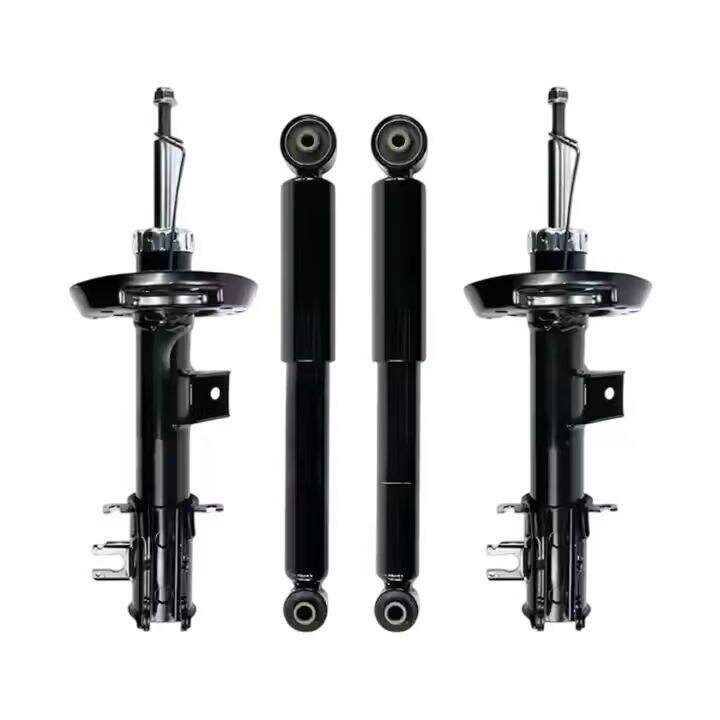
Understanding how shock absorbers enhance vehicle performance is crucial for anyone seeking to improve their driving experience. These critical suspension components work through sophisticated hydraulic mechanisms to control spring oscillation and maintain tire contact with road surfaces. By dampening unwanted vertical movement, shock absorbers create the foundation for both enhanced stability during cornering and improved comfort over various road conditions.
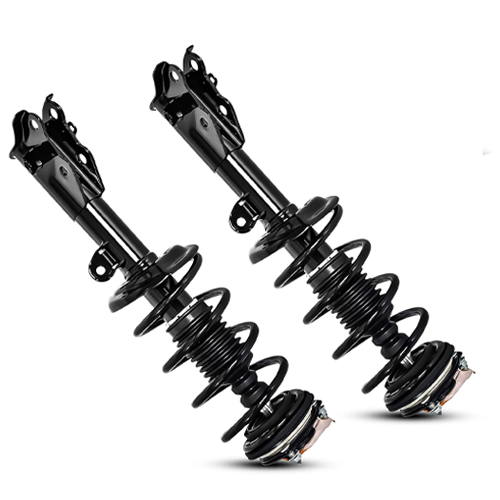
The relationship between shock absorbers and vehicle dynamics involves complex interactions between suspension geometry, weight transfer, and road surface irregularities. When functioning properly, these components simultaneously address two primary objectives: maintaining predictable vehicle behavior through controlled body movement and reducing the transmission of road vibrations to the passenger compartment. This dual functionality makes shock absorbers essential for both safety and comfort in modern automotive design.
The Hydraulic Mechanism Behind Stability Enhancement
Compression and Rebound Control Systems
Shock absorbers improve vehicle stability through precise control of compression and rebound movements during suspension travel. The internal hydraulic system contains specially designed valves that regulate fluid flow during different phases of wheel movement. During compression events, such as hitting a bump or cornering forces pushing the vehicle down, the shock absorber's piston moves through hydraulic fluid at a controlled rate, preventing excessive downward movement that could destabilize the vehicle.
The rebound phase proves equally critical for maintaining stability, as shock absorbers prevent the spring from extending too rapidly after compression. Without proper rebound control, vehicles would experience a bouncing effect that reduces tire contact with the road surface. This controlled extension ensures that wheels remain in contact with the pavement, maintaining traction for steering, braking, and acceleration inputs. The hydraulic dampening force is calibrated to work in harmony with spring rates to provide optimal stability characteristics.
Weight Transfer Management During Dynamic Conditions
Vehicle stability during cornering, braking, and acceleration depends heavily on how shock absorbers manage weight transfer between wheels. During cornering maneuvers, lateral forces cause the vehicle body to roll, transferring weight from the inside wheels to the outside wheels. Properly functioning shock absorbers control this weight transfer rate, preventing excessive body roll that could lead to loss of tire contact or unpredictable handling characteristics.
Under braking conditions, weight transfers forward, compressing the front suspension while extending the rear. Shock absorbers control this pitch movement to maintain balanced braking forces across all wheels. Similarly, during acceleration, rear weight transfer is managed to prevent excessive squat that could reduce front wheel traction and steering effectiveness. This weight distribution control ensures predictable vehicle behavior under all driving conditions.
Comfort Enhancement Through Vibration Isolation
Road Surface Irregularity Dampening
The comfort benefits of shock absorbers stem from their ability to isolate the passenger compartment from road surface irregularities. When wheels encounter bumps, potholes, or textured surfaces, the suspension system must absorb these impacts while minimizing their transmission to the vehicle body. Shock absorbers work in conjunction with springs to create a filtering effect that allows wheels to follow road contours while keeping the passenger compartment relatively stable.
High-frequency vibrations from road texture are particularly important for comfort, as these small but rapid movements can create fatigue and discomfort during extended driving. The hydraulic dampening characteristics of shock absorbers are specifically tuned to attenuate these vibrations while maintaining responsiveness to larger road inputs. This selective filtering ensures that passengers experience smooth ride quality without sacrificing the suspension's ability to handle significant road obstacles.
Frequency Response and Passenger Isolation
Shock absorbers improve driving comfort by managing the frequency response of the suspension system to match human comfort preferences. The human body is most sensitive to vibrations in the 4-8 Hz range, which corresponds to the natural frequency of many vehicle suspension systems. By providing appropriate dampening in this critical frequency range, shock absorbers reduce the amplitude of vertical accelerations experienced by passengers.
The dampening force curves of modern shock absorbers are carefully engineered to provide different responses to various input frequencies. Low-frequency inputs from large road undulations require controlled dampening to prevent seasickness-like motions, while higher-frequency inputs from road texture need sufficient dampening to prevent harshness. This frequency-selective approach ensures that shock absorbers provide comfort across the entire spectrum of road conditions encountered in daily driving.
Integration with Vehicle Suspension Architecture
Spring Rate Compatibility and System Tuning
The effectiveness of shock absorbers in improving both stability and comfort depends on proper integration with the overall suspension system design. Spring rates determine the natural frequency of the suspension, while shock absorbers control the dampening ratio of this oscillating system. The relationship between these components must be carefully balanced to achieve optimal performance in both stability and comfort metrics.
Overdamped systems with excessive shock absorber resistance can provide excellent stability but may transmit excessive road harshness to passengers. Conversely, underdamped systems with insufficient shock absorber control may provide a smooth ride over small bumps but compromise stability during dynamic driving situations. Modern shock absorbers often incorporate variable dampening technologies that can adjust their characteristics based on driving conditions, providing the best compromise between stability and comfort.
Geometric Considerations and Mounting Configurations
The mounting angle and location of shock absorbers within the suspension geometry significantly influence their effectiveness in providing stability and comfort benefits. MacPherson strut configurations integrate the shock absorber as a structural member of the suspension, requiring the component to handle both vertical loads and lateral forces during cornering. This integration provides excellent space efficiency while maintaining effective dampening control.
Multi-link suspension systems often use separate shock absorbers mounted at optimized angles to provide pure dampening function without structural loading. This configuration allows for more precise tuning of dampening characteristics and can provide superior isolation of road inputs. The mounting points and lever ratios in these systems are carefully designed to ensure that shock absorber movement corresponds appropriately to wheel movement throughout the suspension travel range.
Performance Optimization Through Advanced Technologies
Adaptive Dampening Systems
Modern shock absorbers incorporate advanced technologies to provide real-time optimization of both stability and comfort characteristics. Electronic dampening control systems use sensors to monitor vehicle speed, steering input, brake application, and acceleration to continuously adjust shock absorber firmness. These systems can provide firm dampening for enhanced stability during aggressive driving while automatically switching to softer settings for improved comfort during normal driving conditions.
Magnetic rheological fluid shock absorbers represent another advancement in adaptive technology, using electromagnetic fields to instantly change the viscosity of the dampening fluid. This technology allows for extremely rapid adjustments to dampening characteristics, providing optimal response to changing road conditions and driving inputs. The result is a suspension system that can simultaneously maximize both stability and comfort without requiring compromise between these objectives.
Progressive Valve Design and Multi-Stage Dampening
Advanced shock absorber designs incorporate progressive valve systems that provide different dampening characteristics based on the speed and magnitude of suspension movement. During small, slow movements typical of highway cruising, the valves provide minimal resistance to maintain comfort. As movement speed or magnitude increases, additional valving stages engage to provide progressively higher dampening forces for enhanced stability and control.
These multi-stage systems often include separate low-speed and high-speed compression and rebound circuits, each tuned for specific performance objectives. Low-speed circuits handle body control during cornering and braking, while high-speed circuits manage impact absorption from road irregularities. This sophisticated approach allows shock absorbers to provide excellent performance across the entire range of driving conditions while maintaining the delicate balance between stability and comfort.
FAQ
How often should shock absorbers be replaced to maintain optimal stability and comfort?
Shock absorbers should typically be replaced every 50,000 to 100,000 miles, depending on driving conditions and vehicle usage. However, the actual replacement interval depends more on performance degradation than mileage alone. Signs that shock absorbers need replacement include excessive body roll during cornering, increased stopping distances, tire wear patterns, and reduced comfort over road irregularities. Regular inspection by a qualified technician can help determine when replacement is necessary to maintain optimal stability and comfort performance.
Can upgrading shock absorbers improve both stability and comfort simultaneously?
Yes, upgrading to higher-quality shock absorbers can improve both stability and comfort when properly matched to the vehicle and driving requirements. Modern premium shock absorbers often provide superior dampening control and more sophisticated valve designs compared to basic replacement units. However, the key is selecting shock absorbers that are appropriately tuned for the specific vehicle and intended use. Performance-oriented shock absorbers may provide excellent stability but compromise comfort, while comfort-tuned units may not provide adequate stability for spirited driving.
What happens to vehicle stability and comfort when shock absorbers begin to fail?
As shock absorbers deteriorate, vehicles experience progressive degradation in both stability and comfort performance. Stability issues include increased body roll during cornering, nose diving during braking, and reduced traction due to wheel hop or bounce. Comfort degradation manifests as increased harshness over bumps, excessive vertical motion on undulating roads, and general feeling of looseness in the suspension. These problems typically develop gradually, making them less noticeable to drivers until the degradation becomes severe.
Do different shock absorber designs offer varying benefits for stability versus comfort?
Different shock absorber designs do offer varying performance characteristics that can favor either stability or comfort depending on their intended application. Gas-charged shock absorbers typically provide better stability and fade resistance under demanding conditions but may feel firmer over small road irregularities. Hydraulic shock absorbers often provide smoother comfort characteristics but may not offer the same level of performance consistency under extreme conditions. Twin-tube and monotube designs each have distinct characteristics that influence the balance between stability and comfort performance.
Table of Contents
- The Hydraulic Mechanism Behind Stability Enhancement
- Comfort Enhancement Through Vibration Isolation
- Integration with Vehicle Suspension Architecture
- Performance Optimization Through Advanced Technologies
-
FAQ
- How often should shock absorbers be replaced to maintain optimal stability and comfort?
- Can upgrading shock absorbers improve both stability and comfort simultaneously?
- What happens to vehicle stability and comfort when shock absorbers begin to fail?
- Do different shock absorber designs offer varying benefits for stability versus comfort?