
 EN
EN
When a vehicle navigates uneven terrain, sharp corners, or unpredictable road surfaces, the forces acting on it are immense and constantly shifting. The ability of a vehicle to remain stable, predictable, and controllable under these conditions depends almost entirely on the quality and condition of its chassis components. These structural and mechanical elements form the backbone of every vehicle's dynamic behavior, translating driver inputs into controlled motion while absorbing and managing the chaos of complex road environments.
Understanding how chassis components affect vehicle stability is not just a matter of engineering curiosity — it is a practical concern for fleet managers, automotive technicians, and everyday drivers who rely on their vehicles in demanding conditions. From control arms and ball joints to subframes and suspension links, each element of the chassis plays a specific and measurable role in how a vehicle responds to the road beneath it. When these parts are well-engineered and properly maintained, the result is a vehicle that feels planted, responsive, and safe. When they degrade or fail, the consequences can range from poor handling to complete loss of directional control.
The Mechanical Role of Chassis Components in Dynamic Stability
How the Chassis Transfers Road Forces to the Vehicle Structure
Every bump, dip, and lateral force that a road generates must be absorbed, redirected, or dissipated before it reaches the vehicle's occupants or disrupts its trajectory. Chassis components are the primary interface between the road surface and the vehicle body. They do not simply hold the vehicle together — they actively manage the distribution of forces across the entire platform.
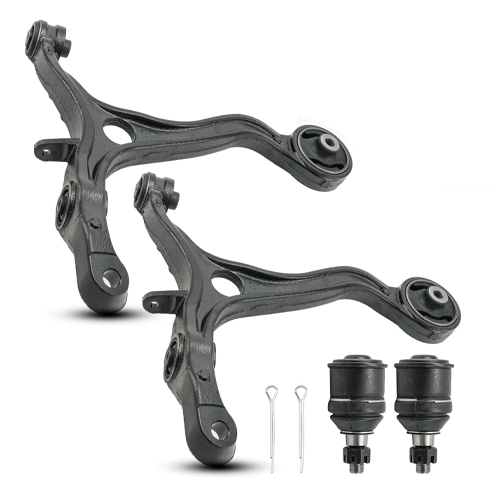
Control arms, for example, serve as the pivoting links between the wheel hub assembly and the vehicle's subframe. When a wheel encounters an obstacle, the control arm allows the wheel to move vertically while keeping it aligned with the vehicle's intended path. Without this controlled articulation, every road irregularity would translate directly into body movement, making the vehicle extremely difficult to steer and control.
Ball joints, which connect the control arms to the steering knuckle, allow for multi-directional movement while maintaining precise wheel positioning. The geometry they maintain — camber, caster, and toe — directly determines how the tire contacts the road surface. Even minor wear in these chassis components can shift wheel alignment enough to cause uneven tire wear, steering pull, and reduced cornering stability.
Subframe Rigidity and Its Effect on Handling Precision
The subframe is the structural platform to which most front or rear chassis components are mounted. Its rigidity determines how accurately suspension geometry is maintained under load. A subframe that flexes under cornering forces allows the entire suspension system to shift slightly, introducing unpredictable changes in wheel alignment that the driver cannot compensate for through steering inputs alone.
In high-stress driving scenarios — such as emergency lane changes or high-speed cornering on uneven roads — subframe integrity becomes critical. Vehicles with reinforced or well-designed subframes maintain consistent suspension geometry throughout the maneuver, giving the driver a predictable and controllable response. This is why chassis components at the subframe level are engineered with tight tolerances and high-strength materials in performance and commercial vehicle applications.
The mounting points where chassis components attach to the subframe are also subject to fatigue over time. Worn bushings at these mounting points introduce compliance into the system — a small amount of which is intentional for ride comfort, but excessive compliance leads to vague steering feel and delayed vehicle response, both of which are dangerous on complex roads.
Suspension Geometry and Its Dependence on Chassis Component Condition
Camber, Caster, and Toe: The Geometry Triangle
Suspension geometry is the precise angular relationship between the wheels, the road, and the vehicle body. These angles — camber, caster, and toe — are set at the factory based on the vehicle's intended handling characteristics. However, they are only maintained correctly when the chassis components that define them are in good condition and properly positioned.
Camber refers to the vertical tilt of the wheel when viewed from the front of the vehicle. Correct camber ensures that the tire's contact patch is maximized during straight-line driving and optimized during cornering. When lower control arms or ball joints wear, camber can shift, causing the tire to lean inward or outward. This reduces the effective contact patch and compromises grip, particularly on wet or uneven surfaces.
Caster angle, which is the forward or rearward tilt of the steering axis, affects straight-line stability and steering returnability. Chassis components such as strut mounts and upper control arms directly influence caster. When these parts are damaged or misaligned, the vehicle may wander at highway speeds or require constant steering correction — a significant safety concern on complex road environments.
How Worn Chassis Components Disrupt Geometry Under Load
Under dynamic load — during braking, acceleration, or cornering — suspension geometry changes slightly as the chassis components flex and articulate. This is expected and engineered behavior. However, when chassis components are worn, the geometry changes become excessive and unpredictable. A worn ball joint, for instance, may allow the wheel to shift position under braking load, causing the vehicle to pull to one side unexpectedly.
Similarly, degraded control arm bushings allow the arm itself to shift fore and aft under acceleration and braking forces. This changes the effective toe angle dynamically, which can cause the vehicle to feel unstable or 'nervous' during transitions between acceleration and braking. On complex roads where these transitions happen frequently, the cumulative effect on driver confidence and vehicle safety is significant.
Regular inspection of chassis components is therefore not just a maintenance recommendation — it is a prerequisite for maintaining the suspension geometry that the vehicle was designed to operate with. Replacing worn parts restores the intended geometry and, with it, the vehicle's designed stability characteristics.
The Impact of Chassis Components on Steering Response and Feedback
Steering Precision as a Function of Chassis Integrity
Steering response — the immediacy and accuracy with which a vehicle reacts to driver inputs — is directly tied to the condition of the chassis components in the front suspension and steering system. When these components are tight and properly aligned, steering inputs translate into wheel movement with minimal delay and maximum precision. This is especially important on complex roads where rapid corrections are often necessary.
The lower control arm is one of the most influential chassis components in this regard. It defines the pivot axis around which the wheel moves during steering and suspension travel. A control arm with worn bushings or a compromised ball joint introduces play into the system — a small but measurable gap between driver input and wheel response. On smooth roads, this may be barely noticeable. On rough or winding roads, it becomes a significant handling liability.
Steering feedback — the tactile information the driver receives through the steering wheel about road surface conditions — also depends on chassis component integrity. Well-maintained chassis components transmit meaningful road feel to the driver, allowing them to sense grip levels and adjust their inputs accordingly. Worn or damaged components filter out this feedback, leaving the driver with less information at precisely the moments when they need it most.
The Relationship Between Chassis Components and Understeer or Oversteer
Understeer and oversteer are handling characteristics that describe how a vehicle responds when cornering forces exceed the available grip. While these behaviors are influenced by many factors including tire compound and weight distribution, the condition of chassis components plays a direct role in determining when and how these behaviors manifest.
A vehicle with worn front chassis components — particularly control arms and ball joints — may exhibit increased understeer because the front wheels cannot maintain the precise geometry needed to generate maximum cornering force. The front end effectively 'pushes' wide of the intended line, requiring the driver to reduce speed or accept a wider cornering arc.
Conversely, rear chassis components that are worn or misaligned can contribute to oversteer tendencies, particularly during mid-corner load transfers. When rear suspension geometry shifts under load due to degraded chassis components, the rear wheels may lose alignment with the vehicle's direction of travel, causing the rear to step out. On complex roads with variable surfaces, this behavior can be extremely difficult to manage.
Chassis Components and Long-Term Stability on Demanding Road Conditions
Fatigue, Wear Patterns, and Proactive Replacement
Chassis components are subject to continuous mechanical stress throughout the vehicle's service life. Every road surface irregularity, every braking event, and every cornering maneuver imposes cyclic loads on these parts. Over time, metal fatigue, rubber degradation in bushings, and wear in ball joint sockets accumulate to the point where the component no longer performs within its design tolerances.
The challenge with chassis component wear is that it is often gradual and therefore difficult to detect without systematic inspection. A ball joint that has lost 0.5mm of its original clearance may not produce obvious symptoms in normal driving, but under the dynamic loads of complex road conditions, that small amount of play can translate into significant geometry deviation. Proactive replacement based on mileage intervals and inspection findings is therefore more reliable than waiting for obvious symptoms to appear.
Fleet operators and professional drivers who regularly use vehicles on demanding routes — construction sites, mountain roads, or heavily trafficked urban environments — should establish shorter inspection intervals for chassis components than the standard manufacturer recommendations, which are typically based on average road conditions. The accelerated wear rates in demanding environments justify a more aggressive maintenance approach.
The Compounding Effect of Multiple Worn Chassis Components
One of the most important and often overlooked aspects of chassis component maintenance is the compounding effect of multiple worn parts. A single worn bushing may have a minor impact on handling. But when multiple chassis components are simultaneously degraded — a common situation in high-mileage vehicles — the combined effect on stability can be disproportionately large.
This is because suspension geometry is a system of interdependent relationships. When one component shifts out of specification, it places additional stress on adjacent components and alters the geometry in ways that other parts must compensate for. Over time, this cascading effect accelerates wear throughout the system and produces handling characteristics that are increasingly unpredictable.
Replacing chassis components in sets — for example, replacing both lower control arms simultaneously rather than just the one that shows obvious wear — ensures that the suspension system operates as a balanced unit. This approach restores the intended geometry relationships and prevents the situation where a new component is immediately stressed by the misalignment caused by its worn counterpart.
FAQ
What are the most critical chassis components for vehicle stability?
The most critical chassis components for stability include lower and upper control arms, ball joints, tie rod ends, subframe mounts, and suspension bushings. These parts collectively define the suspension geometry that determines how the vehicle tracks, corners, and responds to road inputs. Among these, control arms and ball joints are particularly influential because they directly govern wheel positioning under all driving conditions.
How do I know if my chassis components need replacement?
Common indicators of worn chassis components include uneven tire wear, steering pull to one side, vague or imprecise steering feel, clunking or knocking noises over bumps, and visible play in ball joints or bushings during a physical inspection. A professional alignment check can also reveal geometry deviations that indicate worn chassis components even before obvious symptoms appear. Regular inspection at service intervals is the most reliable detection method.
Can damaged chassis components affect braking performance?
Yes, damaged chassis components can significantly affect braking performance. Worn control arm bushings allow the wheel to shift position under braking load, which can cause the vehicle to pull to one side during hard braking. Compromised ball joints may allow wheel geometry to change under the weight transfer that occurs during braking, reducing the tire's contact patch and therefore its braking grip. Maintaining chassis components in good condition is essential for consistent and predictable braking behavior.
How often should chassis components be inspected on vehicles used on rough roads?
For vehicles regularly used on rough, uneven, or demanding road surfaces, chassis components should be inspected at least every 20,000 to 30,000 kilometers, or more frequently if the vehicle is used in particularly harsh conditions. Standard manufacturer service intervals are typically designed for average road conditions and may not account for the accelerated wear rates associated with off-road use, heavy loads, or consistently poor road surfaces. A qualified technician should perform a physical inspection of all key chassis components at each service visit.